We like
We don't like

Our team is dedicated to finding and telling you more about the web’s best products. If you purchase through our links, we may receive a commission. Our editorial team is independent and only endorses products we believe in.
For new parents like myself, choosing a stroller feels like shopping for a new car. There are seemingly endless options and configurations, and it can quickly become a serious investment. Every parent wants a stroller that promises a safe, comfortable ride for baby from newborn to toddlerhood. But beyond that, you might have to consider if you’ll add a second or third sibling, how much storage you really need, and how much parking space you have to spare at home.
Two brands, Uppababy and Nuna, seem to dominate the stroller scene where I live in New York City. I put two of their most popular strollers to the test side-by-side. Here’s how it went.
The Players
Uppababy: In NYC, Uppababy strollers pile up outside daycares during pickup and drop-off. The strollers are built to accommodate multiple kids of various ages, along with the mountains of gear that every kid seems to need. I tested the Uppababy Vista V3.
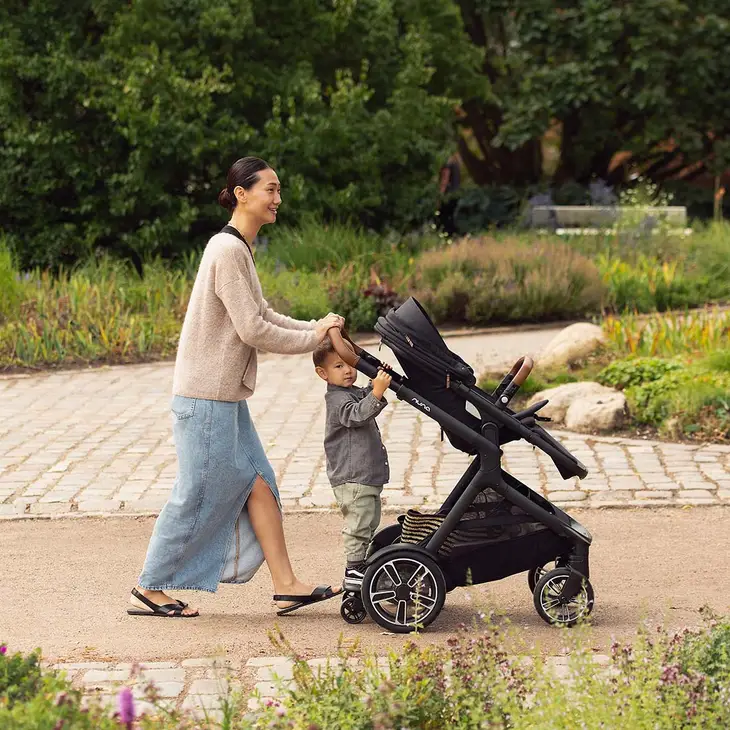
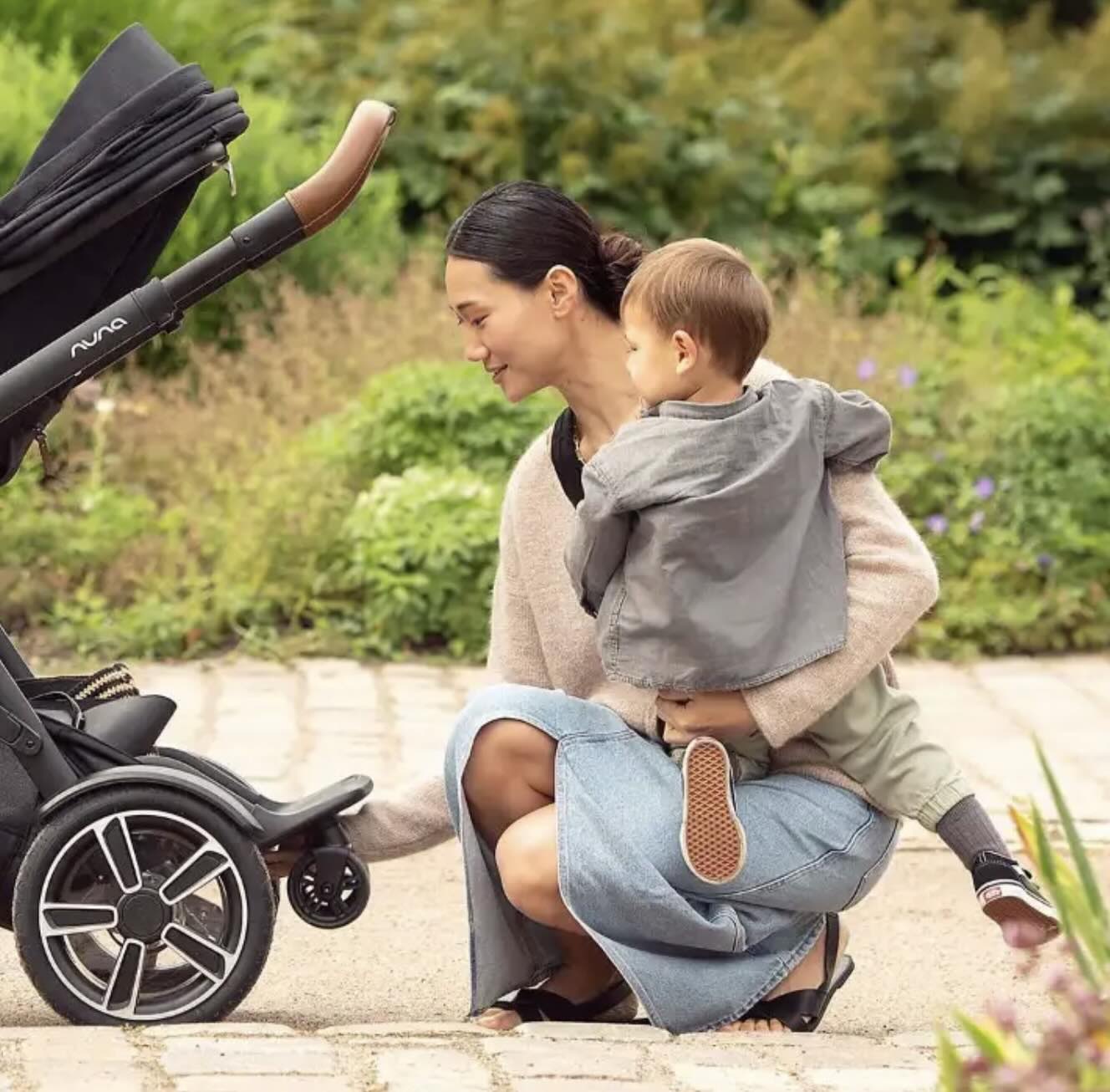
Nuna: Nuna strollers and car seats are Scandi-chic and minimalist without sacrificing practicality. They’re highly rated for safety measures and have excellent suspension and durable wheels to navigate bumpy terrain. I tested the Nuna demi next.
Pricing
The Uppababy Vista V3 costs $999.99 without any attachments. For infants, you'll need to add a bassinet for $280, a SnugSeat for $70 more, or invest in a travel system with the Mesa V3 car seat ($1400 total) or the Aria V2 car seat ($1,500 total).
The Nuna demi next in its most basic form includes a rider board and costs $1,100. For newborns, the bassinet attachment costs $500 extra, or you can purchase a travel system with a car seat for $1,500 to $1,750.
Cost-wise, the two strollers are in the same ballpark.
Specs
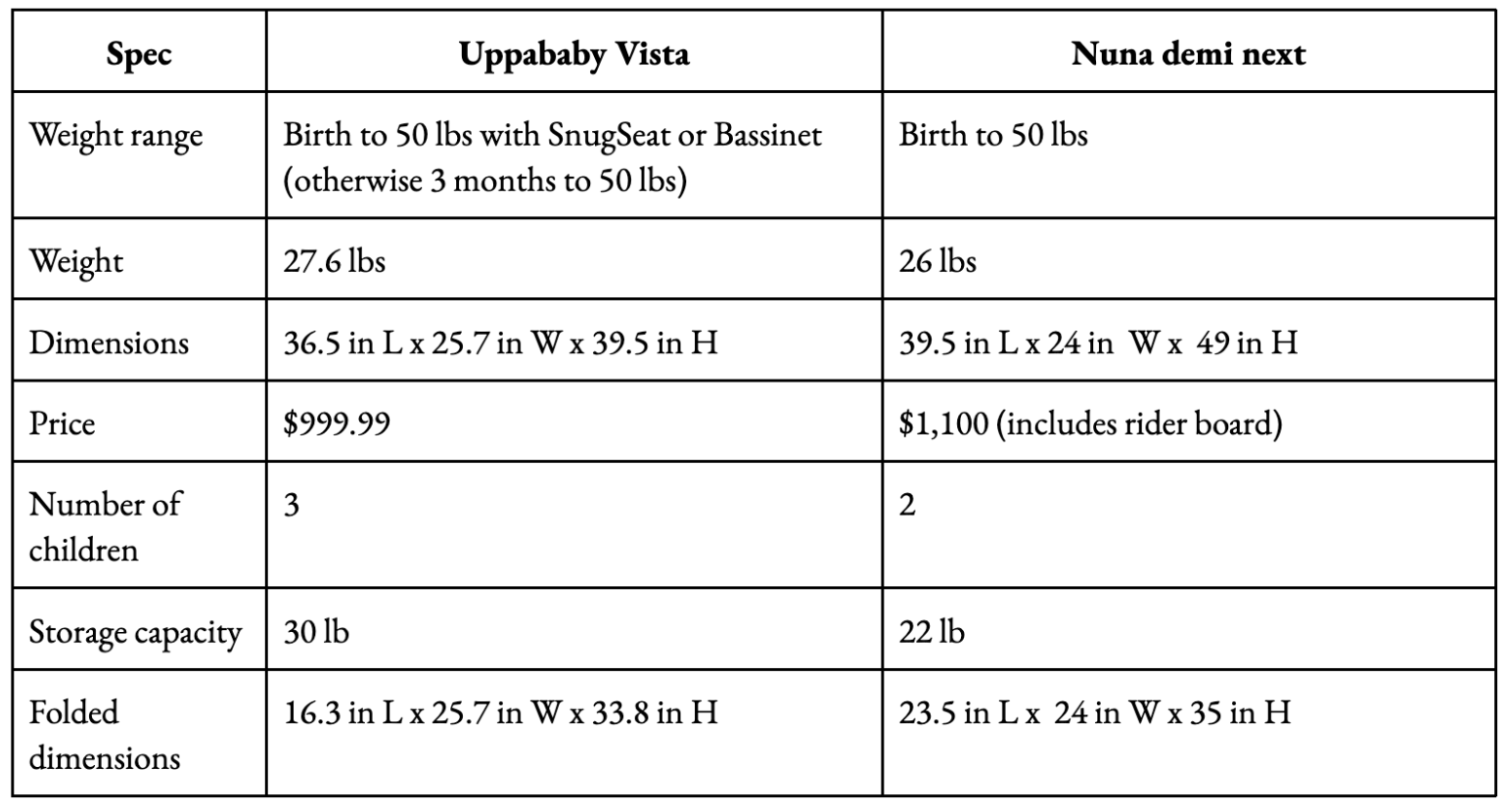
Feature Comparison
Travel and Age Range
These two strollers share some features. Both can become all-in travel systems with a compatible car seat, sold separately. Both have dozens of adjustable shapes to accommodate different ages, with forward and backward-facing seats that can be flat for newborns or upright for big kids.
For travel around the city in cars and on public transportation, I found the Nuna travel system easier and faster to disconnect, fold closed, and stash in the back of a cab. The car seat is also a snap to load into the back seat without a base; all you need is a seatbelt.
I found the Uppababy, which has more configuration options, harder to figure out. I was often stuck on the side of the street clicking various releases before I finally figured out how to collapse the frame.
Winner: Nuna
Sibling Accommodations
The Uppababy can hold three kids, with two in seats and one on a runnerboard. The Nuna stroller can accommodate two, with one on a rider board that holds up to 50 pounds. For this reason, the Uppababy is a better long-term investment if you plan to have more than two kids. The three-kid option can also come in handy during playdates.
Winner: Uppababy
Storage
These heavy-duty strollers offer a nice amount of storage space. The Uppababy stroller can hold a few more pounds of gear, but I’ve never felt limited by the Nuna stroller's capacity. Both have ample space for a diaper bag and groceries.
Winner: Tie
Size
The Nuna stroller is slightly lighter than the Uppababy without attachments. It’s also longer and narrower. I prefer the slightly higher handlebar on the Nuna, as I’m 5-foot-9-inches and like to have some distance between myself and the stroller (otherwise I’m constantly kicking the storage basket).
Folded with the seat, the Uppababy is slightly smaller. Both stroller frames fit into the truck of a sedan without issue.
Winner: Nuna
Maueveriabilty
The Nuna demi stroller has larger, foam-filled wheels that swivel smoothly on uneven terrain. It also has dual suspension to minimize bumpiness for the rider. The Vista V3 wheels glide smoothly forward but don’t feel quite as nimble on bumps or park paths, and the suspension isn’t quite as forgiving as the Nuna’s.
While my stroller-loving baby slept right through many Central Park walks in both strollers, I like that the Nuna produced less turbulence when she’s on the verge of waking up.
Winner: Nuna
Safety
Both strollers have five-point harnesses that are easy to adjust and fit snugly around babies and kids, including infants, with the proper seat inserts. They have rear-wheel, foot-operated brakes that work well, and I feel confident driving with my infant in both strollers.
Winner: Tie
In Conclusion
Ultimately, these are two very similar strollers. Either would make a great addition to a growing family. The Nuna demi next is a durable, highly maneuverable stroller that’s great for navigating uneven terrain without disturbing a sleeping baby.
The Uppababy Vista V3 is a great choice for the city, where it can smoothly navigate sidewalks and streets. It’s highly durable and grows with your family, accommodating up to three kids and 30 pounds of extra cargo. That said, you’ll need to buy a few accessories to make the most of the Uppababy Vista, including a SnugSeat, bassinet, or car seat for a newborn, and attachments for more than one child.
If your top priority is a stroller that can fit up to three kids and you live in the city, the Uppababy Vista is a smart investment. If you’re sticking to one or two kids, travel frequently (or use the car a lot) the maneuverability of a lighter stroller, I recommend the Nuna demi next.