In partnership with Happy Family Organics. Editor’s Note: All opinions are our own. We only select and work with partners that meet our quality standards, so you can rest assured we only endorse products we believe in.
When your baby is ready to self-feed, it’s both incredibly exciting and a wee bit overwhelming. Whether they’re self-feeding purées or soft finger foods, they’re starting to eat more like you, which can stir up all kinds of feelings, from “Wow, my baby is getting so big” to “Wait…is that safe?”
That’s exactly where we can help. We’re breaking down what to know about self-feeding and how Happy Family Organics can help you safely and confidently support your baby’s growing independence at mealtimes.
We like
We don't like
When Can Babies Self-Feed?
Babies are ready to start solids around the 6-month mark when they show signs of readiness. These signs include:
- Sitting with minimal support
- Steady head control
- Showing interest in food and watching you eat
- Bringing objects to mouth
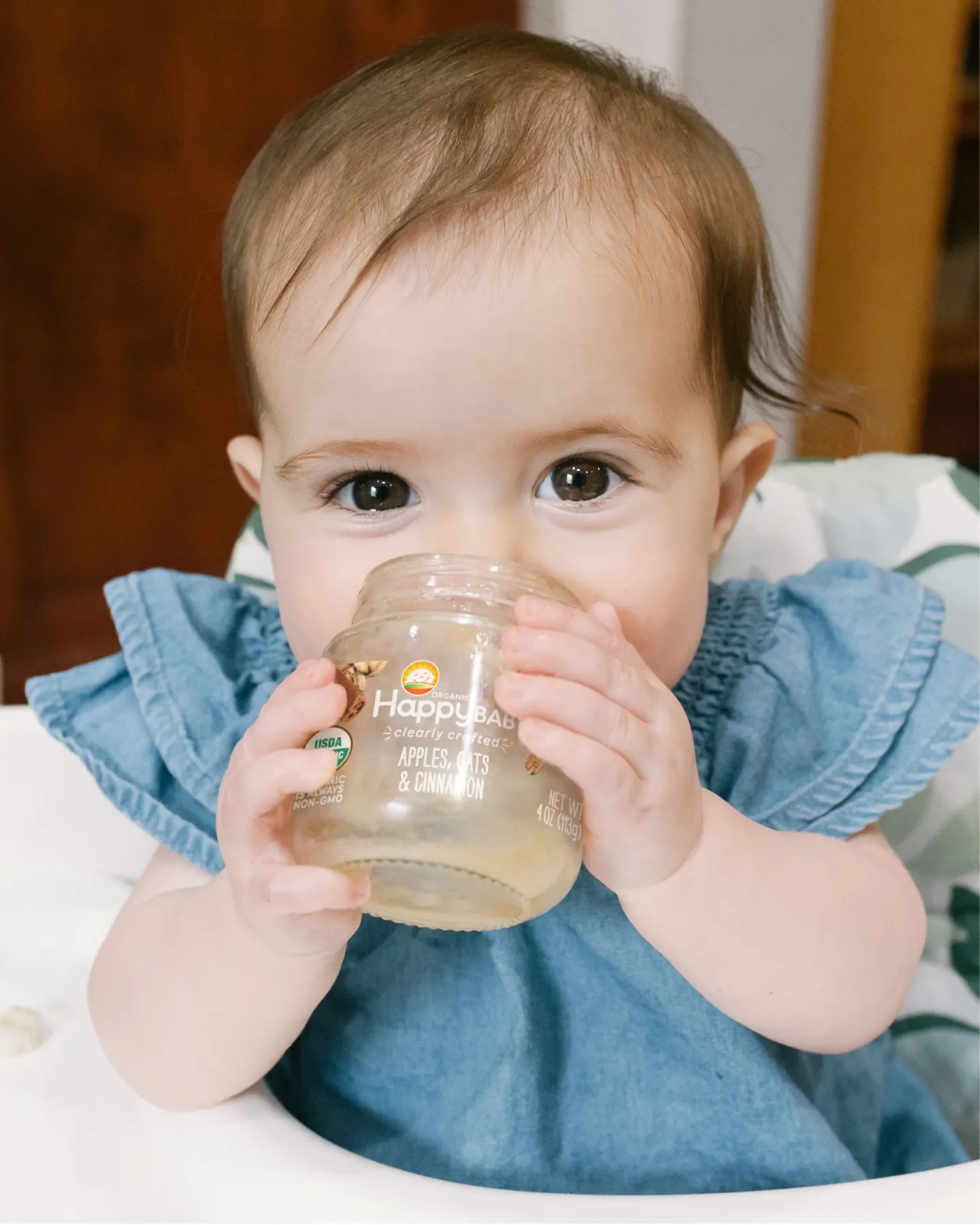
Early on, this usually means self-feeding purées. Instead of spoon-feeding them directly, you can load a small amount of purée onto a baby-friendly, self-feeding spoon and place it in their hand. You can also offer a small smear of Happy Baby Organics Nutty Blends on a piece of lightly toasted bread. This allows babies to explore new tastes and textures, get delightfully messy (because eating should be a sensory experience!), and practice hand-to-mouth coordination.
As your baby gets more comfortable with self-feeding, you can gradually introduce other safe textures, like meltable solids. Happy Baby Organics Creamies, for example, easily dissolve in the mouth when mixed with saliva, making them a great option for texture exploration.
Safe Textures and Shapes
When it comes to finger foods, the number one rule is that they should be soft enough to easily squish between your fingers. Babies at this age rely on their gums, not teeth, to mash their food, and because their oral and motor skills are still developing, soft textures keep eating safe and manageable.
The shape of the food is also important. Babies need pieces they can safely grasp and bring to their mouth. Around 6 months, babies use the palmar grasp (their whole hand) to pick up food. During this stage, offer long, spear-shaped pieces that are easy to hold, like a steamed broccoli floret or sweet potato spear.
Around 9 months, you’ll notice your baby beginning to use the pincer grasp, and picking up small pieces of food with their index finger and thumb. Now you can start offering small, pea-sized pieces of food to help strengthen this fine motor skill. Think: lightly mashed peas, moist salmon flakes, and Happy Baby Organics Creamies.


We like
We don't like


We like
We don't like
We like
We don't like

Keeping your toddlers happy and occupied in the scorching summer heat can be a challenge. However, I’ve learned part of the is keeping them fed. These yogurt bites make snack time simple. My kids love them and so do I. Not only are they gluten-free and made with real yogurt, they taste good too (yes, I do sneak a few - don’t tell my kids).
We like
We don't like
Your Baby’s First Self-Feeding Foods
As your baby grows, the types of foods they can safely self-feed will expand right along with their skills. Here are age-appropriate options to help guide you through each stage:
6 months
- Pureed butternut squash
- Iron-fortified baby cereal
- Whole milk, plain yogurt with no sugar added
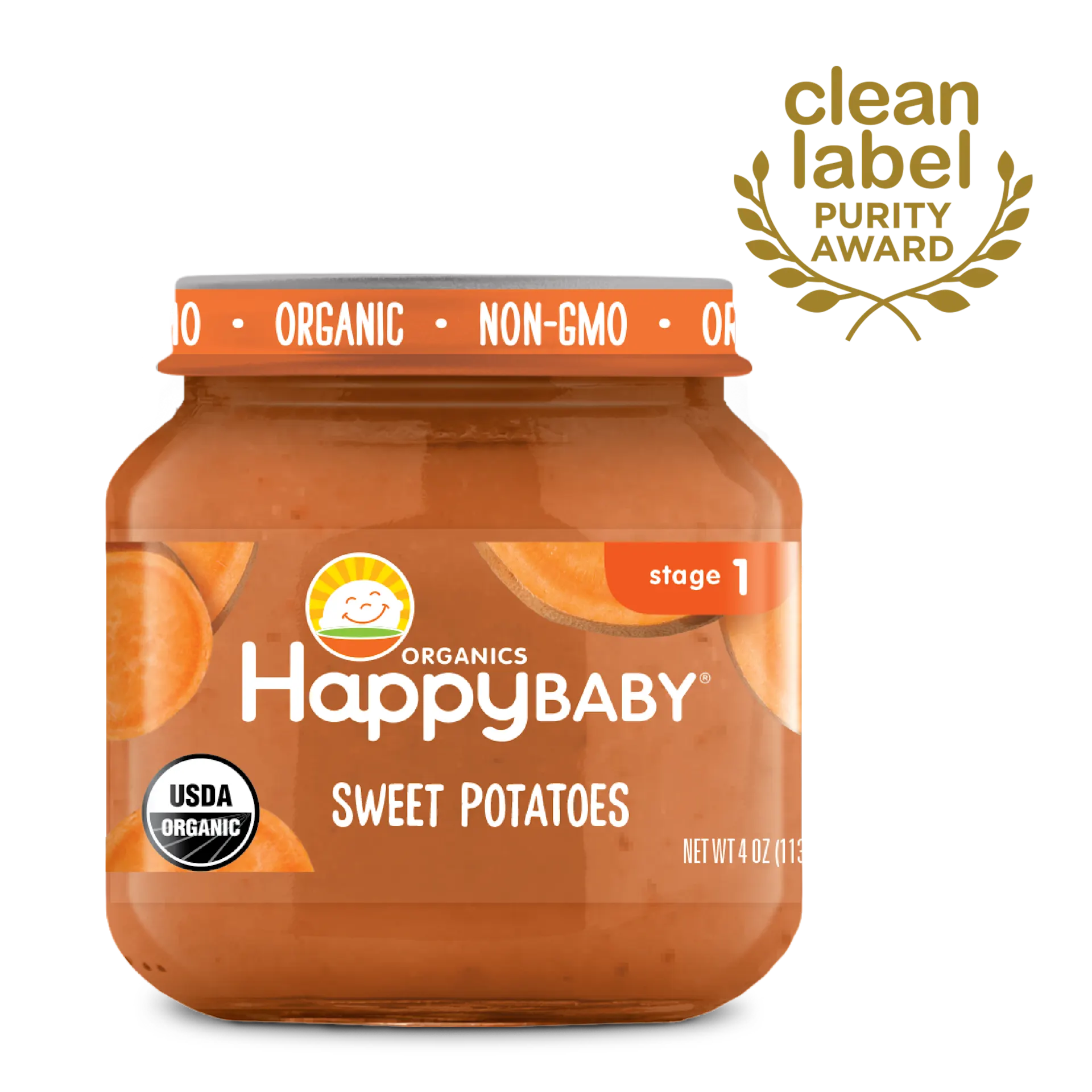
- Happy Family Organic Pouches, Jars, and Nutty Blends*
6 to 9 months
- Soft, spear-shaped foods (ripe banana, avocado spears, cooked potato wedges)
- Steamed broccoli or cauliflower florets
- Pancake strips
- Egg strips
9+ months
- Moist pieces of chicken or fish
- Lightly mashed beans and peas
- Blueberries, halved
- Chopped spaghetti
- Meltable solids like Happy Baby Organics Creamies
Benefits of Self-Feeding
Self-feeding offers a wide range of developmental and mealtime benefits, such as:
- Encourages independence
- Helps babies build a positive relationship with food
- Strengthens oral motor development, hand-eye coordination, and fine motor skills
- Promotes healthy self-regulation, allowing babies to better tune into their hunger and fullness cues
Plus, by supporting self-feeding, you’re laying the foundation for lifelong healthy eating habits. Pretty amazing for someone so tiny (and messy!).
Self-Feeding Tips for Confident Eaters
Helping your baby become a confident self-feeder is all about patience, encouragement, and a few simple strategies that make mealtime easier for both of you. Here are some tried-and-true tips:
- Offer bright, colorful foods. They not only provide a variety of nutrients but also make mealtime more visually appealing and fun.
- Invest in a sturdy high chair with a footrest to help stabilize your baby’s core so they can focus on eating instead of flailing.
- Embrace the mess, it’s a natural part of mealtime learning.
- While homemade purees are lovely, it’s perfectly fine to rely on nutritious premade options, like Happy Baby Organic Pouches.
- Always keep safety in mind and pay attention to common choking hazards, especially foods that are small and round or very tough, hard, or sharp. Some examples include whole chickpeas, blueberries, and grapes, chips, raw carrots or celery, and popcorn.
Most importantly, self-feeding is about giving your baby consistent practice, skill-building, and helping your baby develop independence and confidence at the table. You’ve got this.
*Always consult your pediatrician before introducing allergens to your baby.cr