In partnership with Happy Family. Editor’s Note: All opinions are our own. We only select and work with partners that meet our quality standards, so you can rest assured we only endorse products we believe in.
Pediatric experts and guidelines recommend introducing common allergens early, around the time you start solids, and continuing to include them regularly in your baby’s diet in age-appropriate forms. For many parents, introducing allergens to their baby can feel overwhelming and even a little scary. Between conflicting advice, the fear of allergic reactions, and the pressure to consistently keep allergens in your baby’s diet, this milestone is usually more stress-inducing than exciting. But introducing allergens early is an important step in supporting your baby’s expanding diet – and it doesn’t have to be complicated.
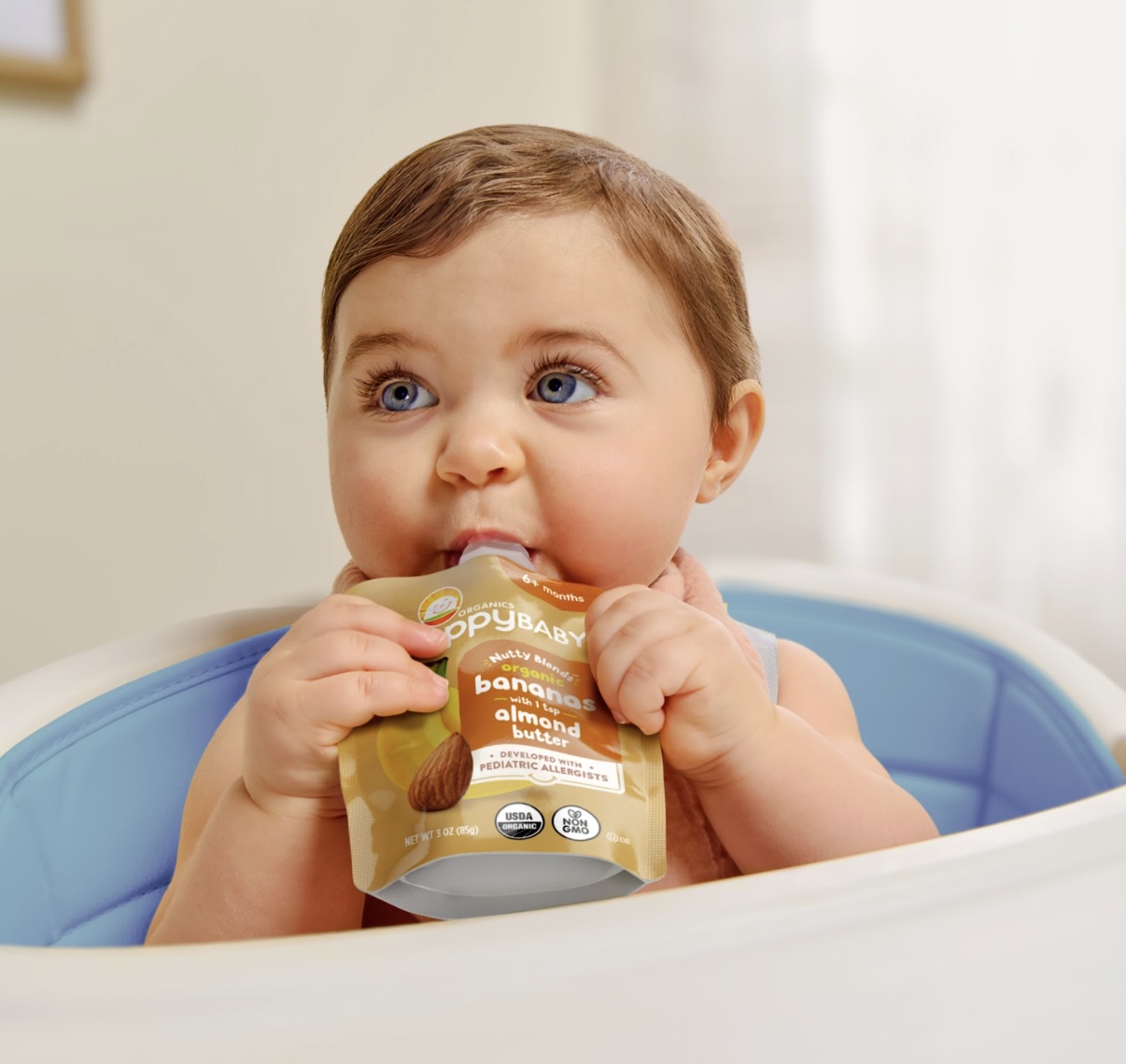
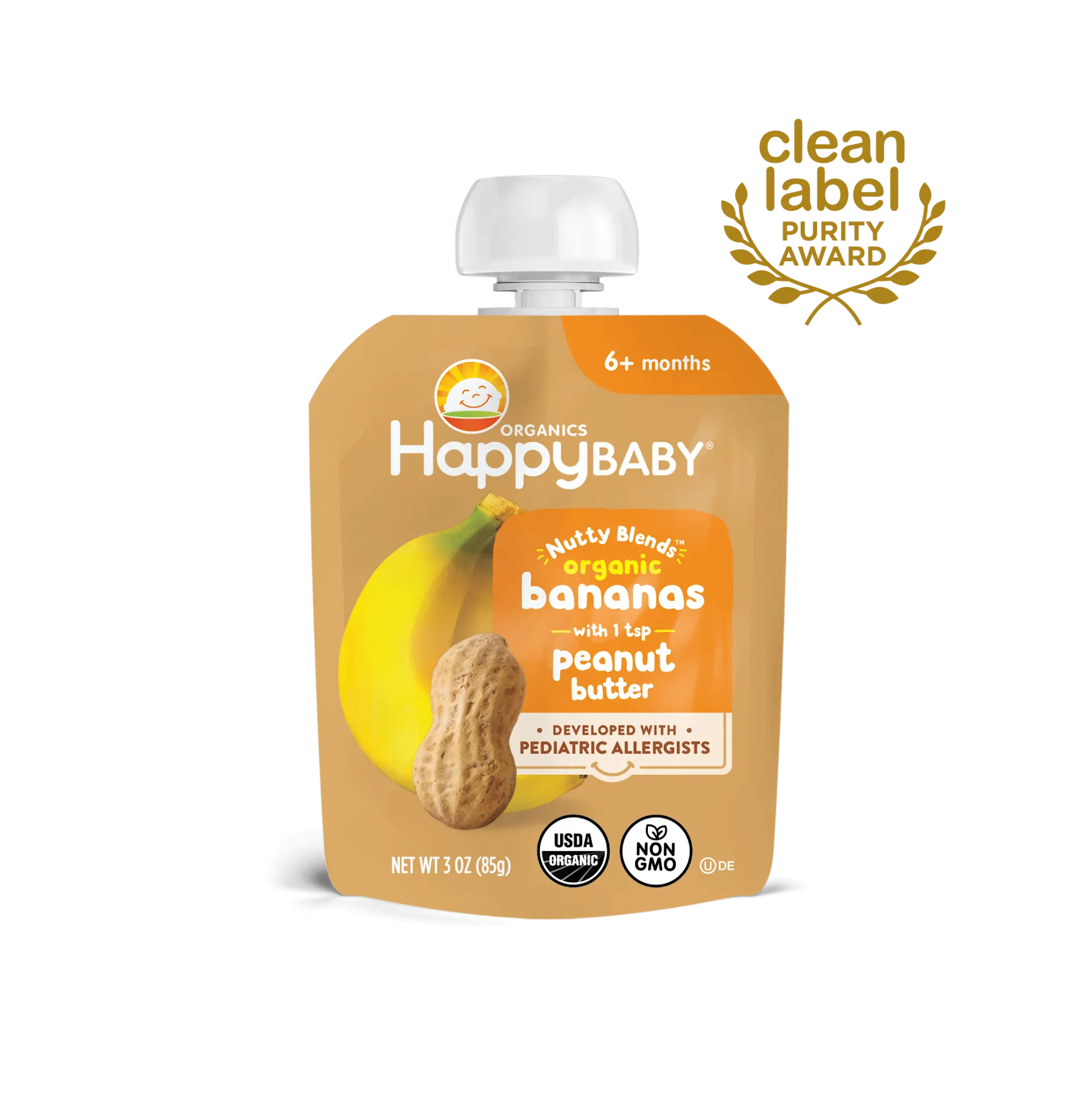
That’s where Happy Baby Organics Nutty Blends come in. These baby pouches are creamy, delicious purees that combine peanuts and tree nuts with familiar fruits, making it a convenient, tasty way to introduce and keep allergens in your baby’s diet. Here’s what you need to know about allergen introduction and how Nutty Blends helps make it easier for you and your baby.
We like
We don't like
Featured Product

We like
We don't like


We like
We don't like

We like
We don't like

We like
We don't like
What Is a Food Allergy and What Are the Major Allergens?
A food allergy happens when the body’s immune system mistakenly identifies certain proteins in food as harmful. This triggers an immune response that can cause a range of symptoms, like an itchy rash or hives, swelling, vomiting, or respiratory symptoms. Most food allergies are caused by nine major allergens, which include:
- Milk
- Eggs
- Soy
- Peanuts
- Tree nuts
- Sesame
- Wheat
- Fish
- Shellfish
Always consult your pediatrician before introducing allergens. If you suspect your child is having an allergic reaction, it is important to seek immediate medical attention. Call 911 or take your child to the nearest emergency room.
Tips on How to Introduce Allergens to Your Baby
Feeling nervous about introducing allergens? You’re definitely not alone, and we’ve got your back. With a few simple strategies, you can make this process smoother and a lot less stressful.
1. Introduce allergens in the morning
One of the biggest worries for parents is the possibility of an allergic reaction. That’s why it’s best to introduce new allergens earlier in the day, ideally in the morning. This gives you plenty of time to watch for any signs of a reaction (also while your pediatrician’s office is open!). Most allergic reactions occur within minutes to two hours after eating a food, so you’ll likely notice symptoms fairly quickly.
2. Offer one allergen at a time
When introducing allergens, it’s important to start with one new food at a time. This makes it much easier to identify the culprit if your baby has a reaction. Begin by offering a small amount on the first day. If there’s no reaction, you can offer it again the next day, gradually increasing the portion over three to four days. During this period, continue giving your baby other familiar foods that they already tolerate well.
Products that contain single isolated allergens, like Nutty Blends, can be a helpful option since they allow you to introduce one allergen at a time. These pouches are available in almond, walnut, cashew, and their newest addition, peanut. Nutty Blends were developed in collaboration with pediatric allergists to make allergen introduction more approachable and less overwhelming for the whole family. Plus, on top of being organic and non-GMO, Nutty Blends have also earned the Clean Label Purity Award.
3. Keep it in the diet with Nutty Blends
Once you know an allergen is safe for your baby, the goal is to offer it a few times a week. Between meal planning, work, daycare, and all the other responsibilities on your plate, making homemade food with allergens is probably the last thing on your mind. Nutty Blends offers an easy, ready-to-use option that fits into everyday life. They’re convenient to serve at home, they pack well for travel, and can help feeding on busy days.
Simple Ways to Serve Allergens at Mealtime
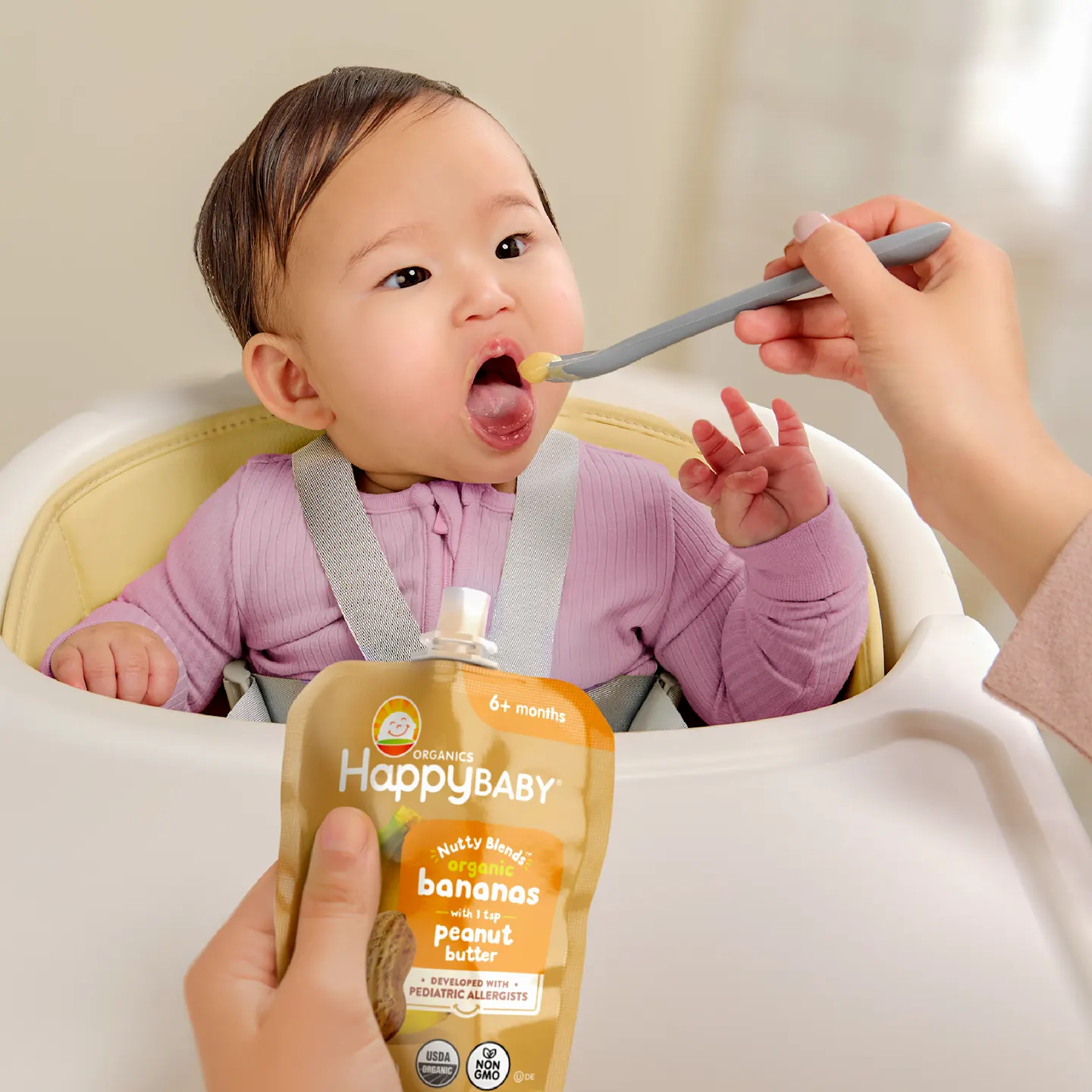
When it comes to planning meals, the key is keeping it simple. You can offer Nutty Blends on their own or mix small amounts of Nutty Blends into familiar foods (like oatmeal). You can also spread a thin layer on lightly toasted bread for babies who are ready to self-feed (ages 6+ months) .
A few other ways to incorporate after initial exposure/determined tolerance:
- Milk: Offer plain whole milk yogurt, shredded cheese, or add milk to oatmeal.
- Eggs: Scrambled egg or omelets.
- Soy: Soft, thin tofu strips, mashed edamame, or add soy milk to pancake recipes.
- Peanuts: Thinned creamy peanut butter swirled into applesauce or spread on lightly toasted bread.
- Tree nuts: Mix a tree nut-based Nutty Blend pouch into cottage cheese or plain, whole milk yogurt.
- Sesame: Sprinkle sesame seeds on avocado strips or steamed broccoli.
- Wheat: Pancakes or muffins made with wheat flour.
- Fish: Flaked, fully-cooked fish (like salmon).
- Shellfish: Mix fully-cooked, finely chopped shrimp with rice.
Introducing allergens doesn’t have to feel like a high-school science experiment. Take it one step at a time, keep tolerated foods in the rotation, and let Nutty Blends be your partner for feeding peanuts and tree nuts on busy days. You’ve got this!