We like
We don't like
Featured Product

In partnership with Happy Family. Editor’s Note: All opinions are our own. We only select and work with partners that meet our quality standards, so you can rest assured we only endorse products we believe in.
Whether you’re a full-blown wellness junkie or simply wellness-curious, you’re probably mindful of your health habits. Maybe you’re religious about your morning green smoothie, have bought into the protein craze, or consider your probiotics non-negotiable. Your baby’s “wellness stack,” though, might not exactly be a top priority.
Babies’ digestive systems and immune systems are still developing, and brands like Happy Family Organics have made them a cornerstone of their infant nutrition philosophy. Keep reading to learn everything you need to know about probiotics for babies and some ways for incorporating them into your baby’s routine.
What Are Probiotics?
Your baby’s gut is home to trillions of tiny microorganisms (also known as the gut microbiome) that play a significant role in digestive health and immune system development. From day one, your baby’s gut is constantly developing and evolving to help break down food, support the digestive system, and keep harmful bacteria O-U-T. That’s a lot of responsibility for a tiny tummy.
Where Can Babies Get Probiotics?
Look for probiotics in foods like:
- Fortified infant formulas: Some infant formulas are fortified with probiotics to support digestive health and immune system development.
- Probiotic yogurt: Once your baby is ready for solids, you can offer them foods like certain yogurt that have probiotics added.
- Supplements: In certain cases, pediatricians may recommend probiotic supplements (like drops). Always consult your pediatrician before giving your baby any supplement.
- Also note: Breast milk naturally contains microorganisms that can help support baby’s development and shape the microbiome.
What About Prebiotics?
If probiotics are the “good” bacteria, prebiotics are what keep them well-fed and happy. These special ingredients serve as fuel for probiotics, helping them grow and thrive in your baby’s gut. Common prebiotic-rich foods include garlic, onions, leeks, oats, barley, asparagus, artichokes, apples, and green bananas.
For babies, prebiotics come from breast milk in the form of human milk oligosaccharides (HMOs), special carbohydrates that help shape the infant gut microbiome and support the development of the immune system. Babies can also receive prebiotics from fortified infant formulas, or later, from fruits, vegetables, and whole grains.
How Can I Make Sure My Baby Gets Probiotics and Prebiotics?
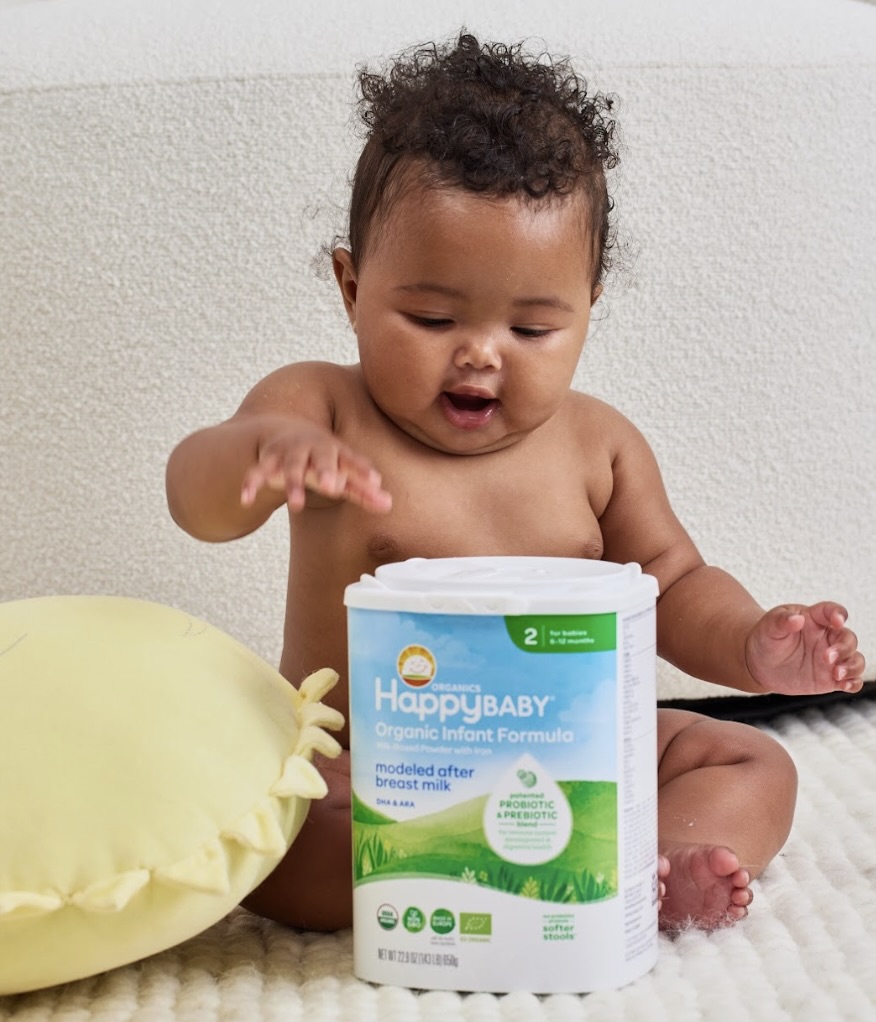
Every baby’s feeding journey looks a little different, and that’s okay. The good news is, there are several ways to help support your baby’s developing gut. Breast milk naturally contains everything baby needs to nourish the gut and support immune system development, which work together to nourish the gut and strengthen the immune system.
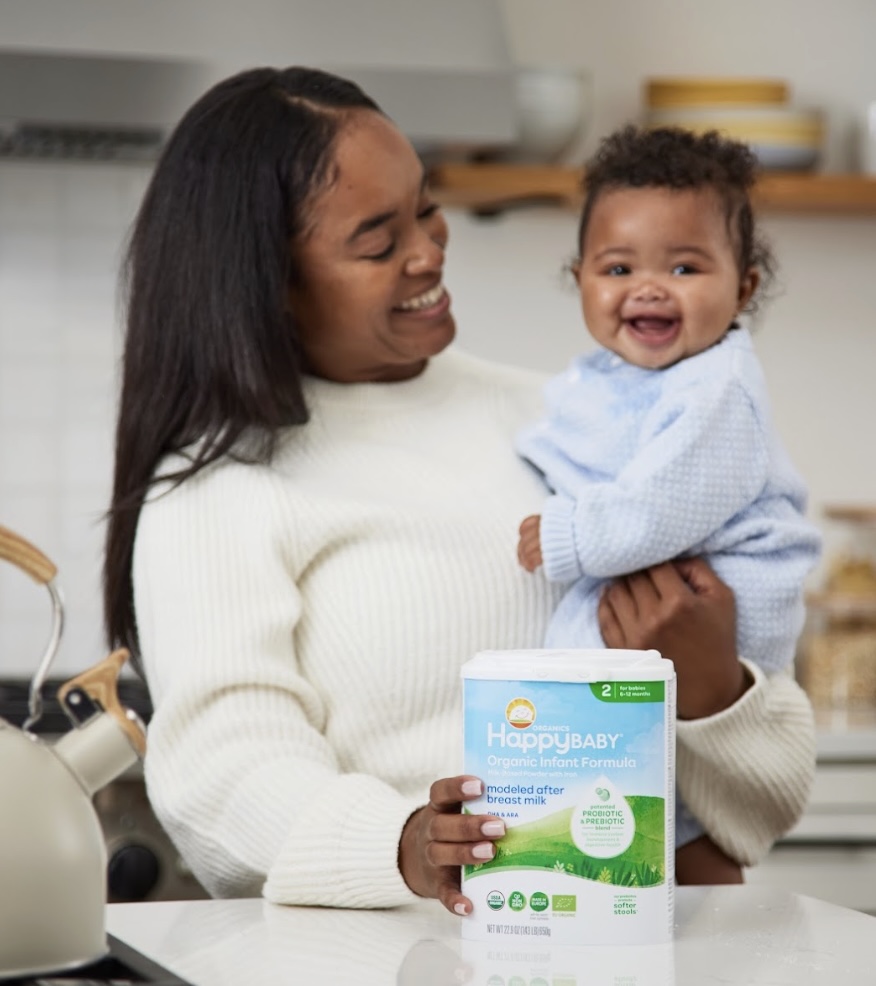
For formula-feeding families, Happy Family Organics Stage 2 Formula is an excellent option. In fact, it’s the only USDA Organic formula with both prebiotics and probiotics, thoughtfully made to help support digestive health, immune system development and softer, more regular stools compared to formula without prebiotics and probiotics.
As your baby begins exploring solid foods, you can continue to nurture their gut health through wholesome, fiber-rich choices. Foods like unsweetened, whole milk yogurt with probiotics and pureed fruit or whole grains such as oats and barley are great options.
Signs Your Baby’s Gut Is Thriving
While you can’t see probiotics and prebiotics working directly, there are some helpful signs that your baby's digestive health is supported:
- Regular, soft stools
- Less gas
- Less fussiness after feeds
Paying attention to these cues can help you feel confident that your baby is getting the gut support they need, whether through breast milk, fortified formula like Happy Family Organics Stage 2 Formula, or age-appropriate solid foods.