


.jpg)
We like
We don't like
Our team is dedicated to finding and telling you more about the web’s best products. If you purchase through our links, we may receive a commission. Our editorial team is independent and only endorses products we believe in.
Late Checkout is TQE’s travel vertical. Whether you’re seeking an Eat Pray Love moment of your own, or a wholesome family sojourn, we hope you embark on an adventure requisite of a late checkout below.
In landscape design, permaculture is the practice of building in harmony with the natural systems around you. And in permaculture, when you acquire a new piece of land, you are instructed to – first and foremost – do nothing. Just observe.
In our culture of doing and building and growing – quickly! better! faster! no seriously, now – the concept of sitting on a piece of land for weeks, or sometimes months, or maybe even years, is unthinkable.
But spend a few days at Playa Viva, a two Michelin-key luxury eco boutique hotel on 200 acres between the Sierra Madre Mountains and the ocean in Guerrero, Mexico, and you might realize: taking the time to observe and simply be is, perhaps, what life is all about.

Permaculture’s principles – which also include integration over segregation, using small and slow solutions, catching and storing energy, obtaining a yield, and accepting feedback, among a few others – guided the building of Playa Viva. They’ll also bleed into every element of your stay.
Guests are encouraged to arrive and unwind before booking any plans; and each room, meal, and activity has a simplicity and open-ness that will stop you in your tracks. I mean this both conceptually and also quite literally – you’ll sleep in a tree house, and you’ll be hard-pressed to find a wall, window, or roof on the entire property enclosed enough to block out the sound of the ocean waves (light sleepers, rest assured: ear plugs are provided).
The Land Came First
Founders David Leventhal and his then-wife Sandra Kahn bought Playa Viva’s acreage in 2006 to prevent it from being developed into a row of resorts as the beaches in Ixtapa (a thirtyish minute drive away) had been during the country’s 1970s tourism push. The pair spent time interviewing locals and elders and studying the land before breaking ground. They opened Playa Viva in late 2009 with a triple-bottom-line approach: with care for people, planet, and profit.
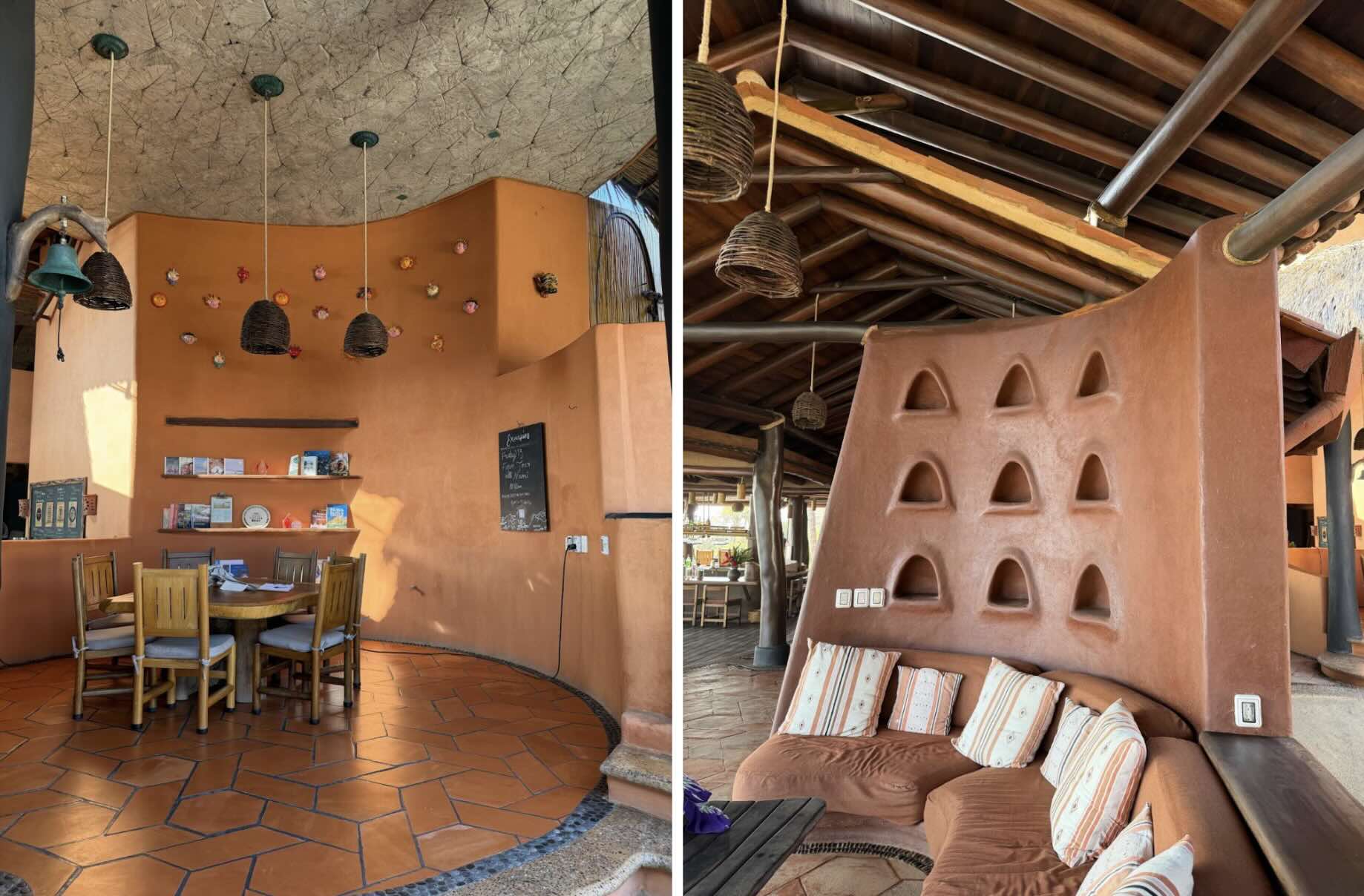
When the property first opened, it included five casitas; over the past 18 years, it has undergone several phases of growth which were, as you might have guessed, small and slow. Each of the current 20 structures is a little bit different, built one-at-a-time by local palapa builders. What they learn from building one informs the building of the next.
The famous bamboo treehouses were part of an expansion, and their design mimics the shape of the manta rays that swim in local waters. The newest addition, the Infinity Casita, is the first with air conditioning.
Throughout my stay, I noticed a recurring (and admittedly not-very-permaculture-istic) instinct to ask ‘what’s next?’. While there are rumblings of an answer, there’s no distinct timeline yet. The team hopes Leventhal’s other projects (he consults on a number of eco hotels and runs Regenerative Travel) will keep him busy for a while.
Beyond the Casitas
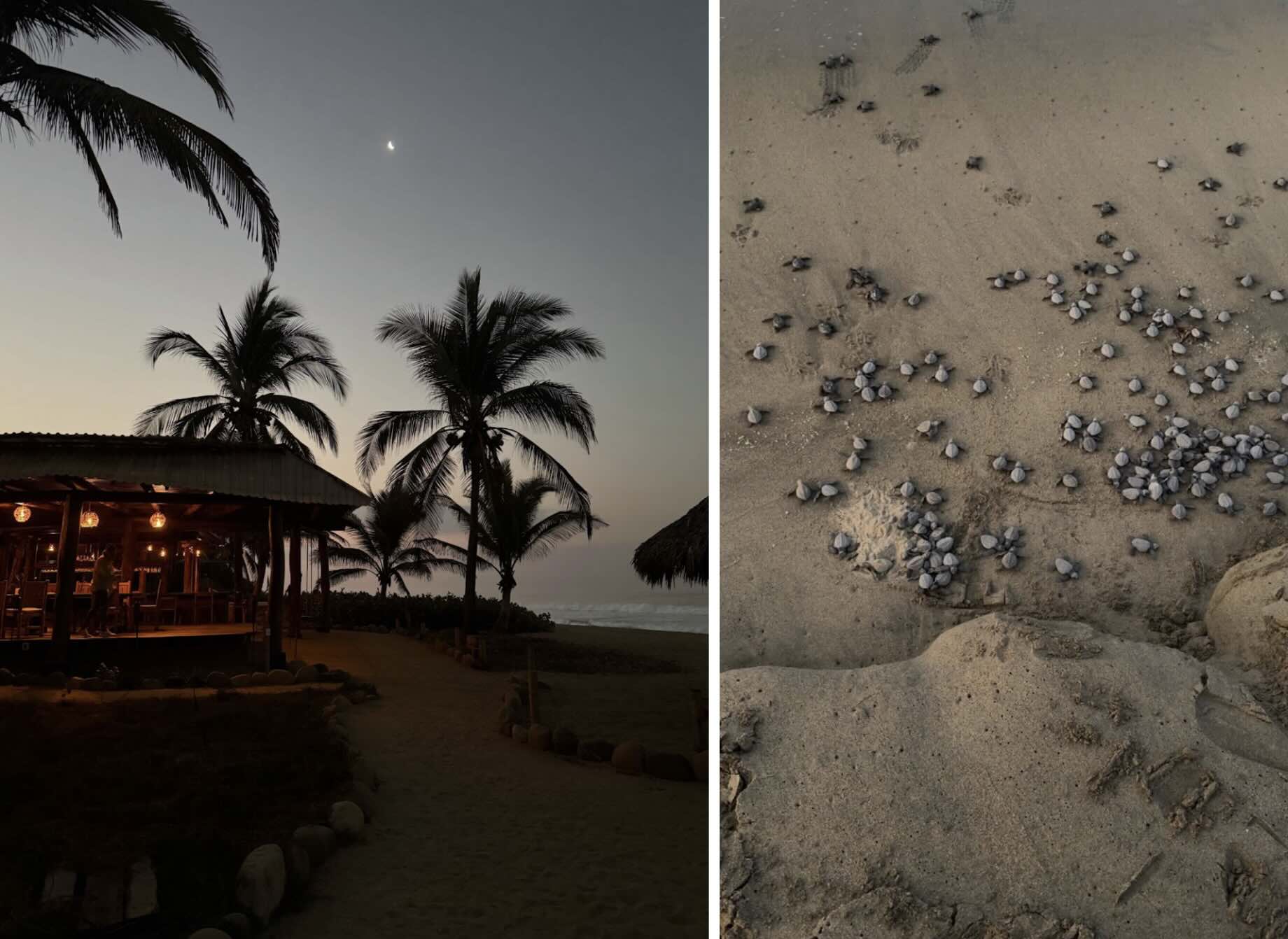
The structures take up a small portion of Playa Viva’s land. It’s also home to an estuary and a coastal forest and mangrove ecosystem, plus a turtle sanctuary. Local volunteers patrol the beach at night to look for Olive Ridley, Green, and Leatherback turtles or turtle tracks, collect nests buried in the sand, and bring them to the sanctuary just as the mother turtle left them. Around 45–60 days later, they hatch, and volunteers escort them to the ocean to protect them from the predators and poachers that have rendered them endangered. Experiencing this is, without a doubt, worth the 6:30am call time.
And then there’s the farm. We had a chance to tour a portion of it and get a proper crash course in regenerative agriculture. In short, Playa Viva’s farmers aren’t thinking about next season’s harvest. They’re thinking about the impact their decisions will make for years and generations down the line.
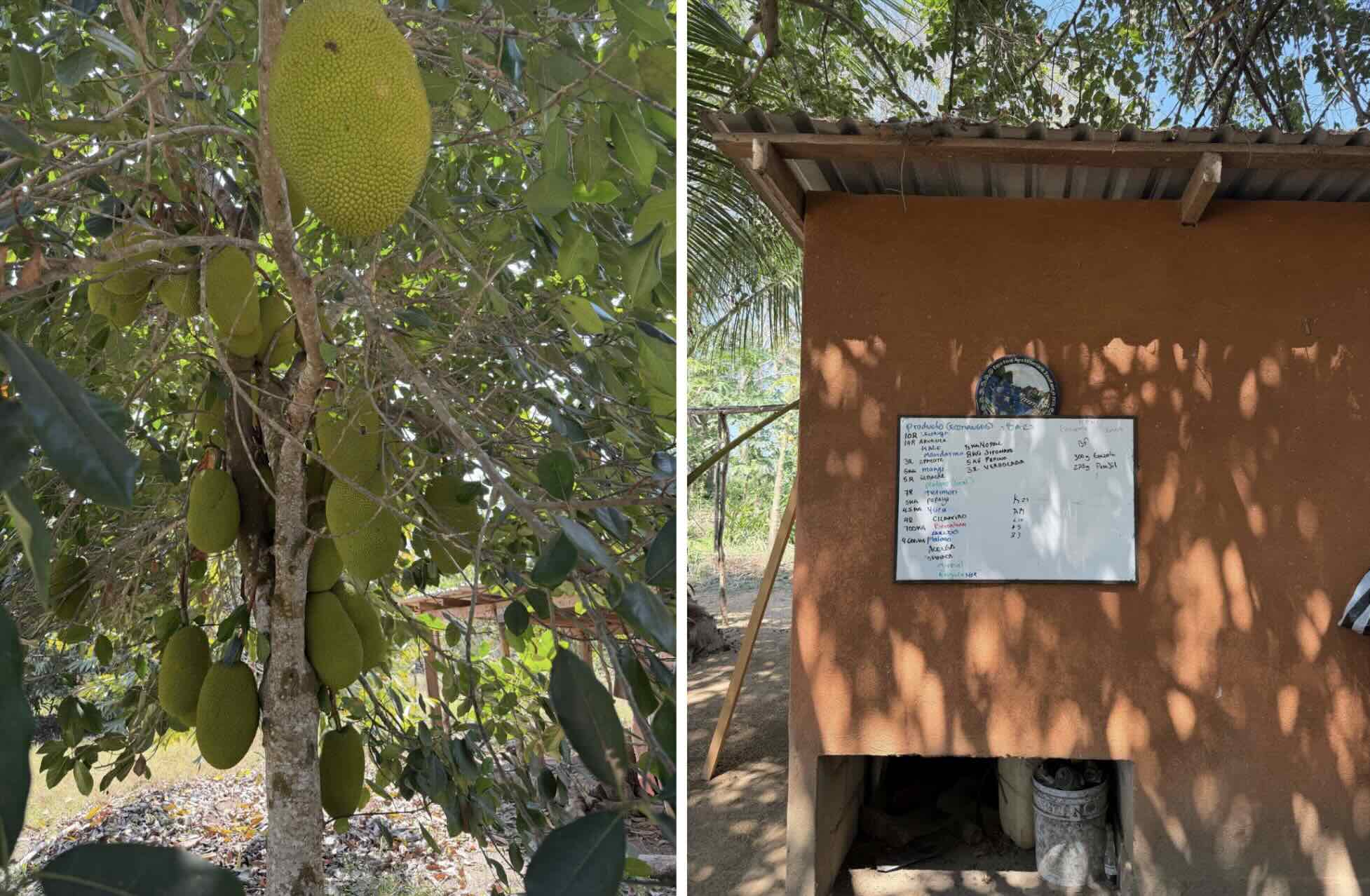
Our guide walked us through rows of crops that had been planted together synergistically: for example, a banana tree that offered shade to an aloe plant, which stored water for both plants, plus a nearby cinnamon tree, whose antifungal properties kept all three plants in check. The farm proves that human interference, when studied and intentional, can mirror and expedite what will eventually occur in nature.
Farm-to-Table Isn’t a Buzzword Here
Three meals a day are included in your nightly rate (alcohol and smoothies cost extra). And of those meals, about 70% of the food is grown on Playa Viva’s farm. That includes everything from fresh greens to nuts and seeds, coconuts, bananas, jackfruit, watermelon, and hibiscus flowers (I still think about the hibiscus jam every morning). The food that isn’t grown on Playa Viva’s farm – milk, cheese and eggs, coffee – is sourced from the nearby town of Juluchuca and three other communities in the local watershed.

The food is no-frills and incredibly delicious – sprouts salads, veggies served over vibrant purees, grilled proteins, homemade tortillas and bread, local cheese, perfectly-ripe avocados, juicy fruit. Meals are served buffet-style and eaten communally at 9am, 2pm, and 7pm.
Between meals, the day is loose and up to you: yoga at 8 is included; surfing, kayaking, snorkeling, and other excursions can be booked upon arrival; hammock, pool, and beach time at your leisure. It turns out just sitting with the ocean is surprisingly easy by day two.
All-Inclusive Takes New Meaning
The ‘inclusive’ element is the part of Playa Viva that has stuck with me most. While an ‘all-inclusive’ resort has a colloquial meaning, Playa Viva defines it differently. Yes, your airport transfer and your meals and daily yoga classes are covered, but there’s also an essence of inclusivity and connection – with other guests, the Playa Viva team, and the land itself – that I haven’t felt elsewhere.
On my final night, I found myself squeezed around a table with eight other guests, seven of which I hadn’t known three days prior. As the lights twinkled above us, and the waves crashed behind us, we ate and drank and chatted for hours. The entire experience felt of-another-time, and we learned that Leventhal had planned it all that way:
He and Kahn honeymooned on a remote island in Australia. When they were whisked away to a private dinner table each night, Leventhal couldn’t help but wonder: Who were these other guests? How had they ended up at this remote location, too? Where were they off to next?
Playa Viva was, in many ways, shaped by Leventhal’s questions.
The 12th and final principle of permaculture is: creatively use and respond to change. At this point, we’re all probably tired of hearing how much, and how quickly, our world is changing. Playa Viva is Leventhal’s simple – and incredibly impactful – response to it.
.jpeg)
.jpeg)
.jpeg)


