We like
We don't like
Featured Product
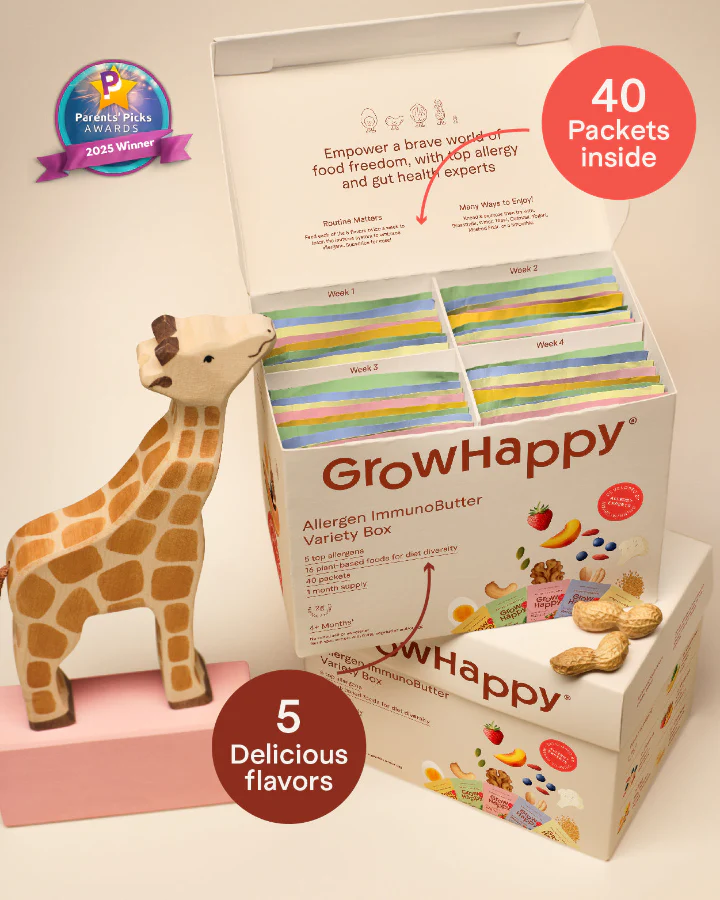
In partnership with GrowHappy. Editor’s Note: All opinions are our own. We only select and work with partners that meet our quality standards, so you can rest assured we only endorse products we believe in.
Introducing your baby to solid foods is an exciting milestone, but when it comes to allergens, it can also feel a little intimidating. As a pediatric dietitian and mom of three, I’ve been there myself. It’s completely normal to worry how your baby might react, especially when you hear about symptoms like hives, swelling, or digestive discomfort.
Food allergies are relatively common, so it makes sense that they’re top of mind as you begin solid foods with your baby. Fortunately, with the right information and a simple plan, introducing allergens doesn’t have to feel overwhelming. In this article, I’ll walk you through everything you need to know about allergens when starting solids: when to introduce them, how to do it safely, and why consistency matters. Plus, I’ll share a helpful mom hack that can make the process easier, including how GrowHappy can support you and your baby’s gut health along the way.
Why Allergen Introduction Matters
Starting solids is an important window for introducing allergens. Allergens are proteins that can cause an allergic reaction when the body mistakenly sees them as harmful. While most foods are well tolerated, a small group of nine foods are more likely to cause a reaction, including:
- Cow’s milk
- Egg
- Fish
- Shellfish
- Peanuts
- Treenuts (like walnuts and cashews)
- Soy
- Sesame
- Wheat
Introducing these foods early and consistently every week for at least 3-6 months can actually help protect your baby. Research shows that offering allergens around the time you start solids (between 4-6 months) and continuing to offer them regularly is shown to have protective benefits.
It might feel a little nerve-wracking at first, but early and consistent weekly exposure for a minimum of 3 to 6 months (ideally 3 to 5 years) is one of the most powerful tools we have when it comes to allergy feeding, and it can become a simple and manageable part of your baby’s feeding routine.
How to Introduce Allergens Safely
Here are some tips to help you introduce allergens safely and with confidence:
- Introduce one new allergen a day: Since most reactions occur within a two hour time frame, offer a single allergen and monitor during that window. You can introduce allergens alongside non-allergens and foods your child already tolerates. For example, serve cashew at the same meal as kale or mango.
- Feed at home, earlier in the day: It’s best to introduce allergens for the first time in an environment where you can focus your attention on the infant without distractions for two hours. Morning is an ideal time to offer an allergen, since it gives you time to monitor for a potential reaction. Plus, babies are typically hungry enough to eat a full serving (about 2 grams) of the allergen.
- Pick the right moment: Avoid introducing allergens when your baby is sick or fussy so as not to confuse illness or crankiness with an allergic reaction.
- Begin with a small amount: Offer your baby a small amount of the allergen on the tip of a spoon. Wait 10 minutes and then gradually increase the portion of the allergen if no reaction occurs.
- Maintain regular exposure for at least six months: Once your baby tolerates the allergen, aim to offer it twice a week for at least six months. Studies show that true tolerance is built with repeated weekly exposure. Try to keep it in the diet regularly for 3-5 years while the immune system is developing.
- Stop if symptoms appear. If you notice an allergic reaction, stop feeding the allergen. Consult your pediatrician or allergist to determine the safest next steps.
What to Know About Allergic Reactions
Allergic reactions can look very different from one child to another. Some reactions are mild and others are severe and potentially life-threatening. It’s important to know what to watch for.
Mild to moderate symptoms:
- Itching
- Sneezing
- Hives
- Rashes
- Nausea
- Vomiting
- Diarrhea
- Stomach pain
If two or more body symptoms are affected, like vomiting (gastrointestinal) and hives (skin), it is considered a severe symptom. Other severe symptoms include:
- Trouble swallowing
- Breathing issues
- Loss of consciousness
- A weak pulse
Severe symptoms can be a sign of life-threatening anaphylaxis and require immediate treatment with epinephrine. If your child has a severe reaction, call 911.
How GrowHappy Makes Allergen Feeding Easier

Feeding allergens can feel tricky, and many parents try an allergen once or twice and then move on. However, research behind “early and often” guidance shows that weekly exposure for at least six months is important for building tolerance. Children who were only fed allergens for a month or two had poorer outcomes. Early and often allergen exposure builds tolerance by helping the immune system learn that these foods are safe.
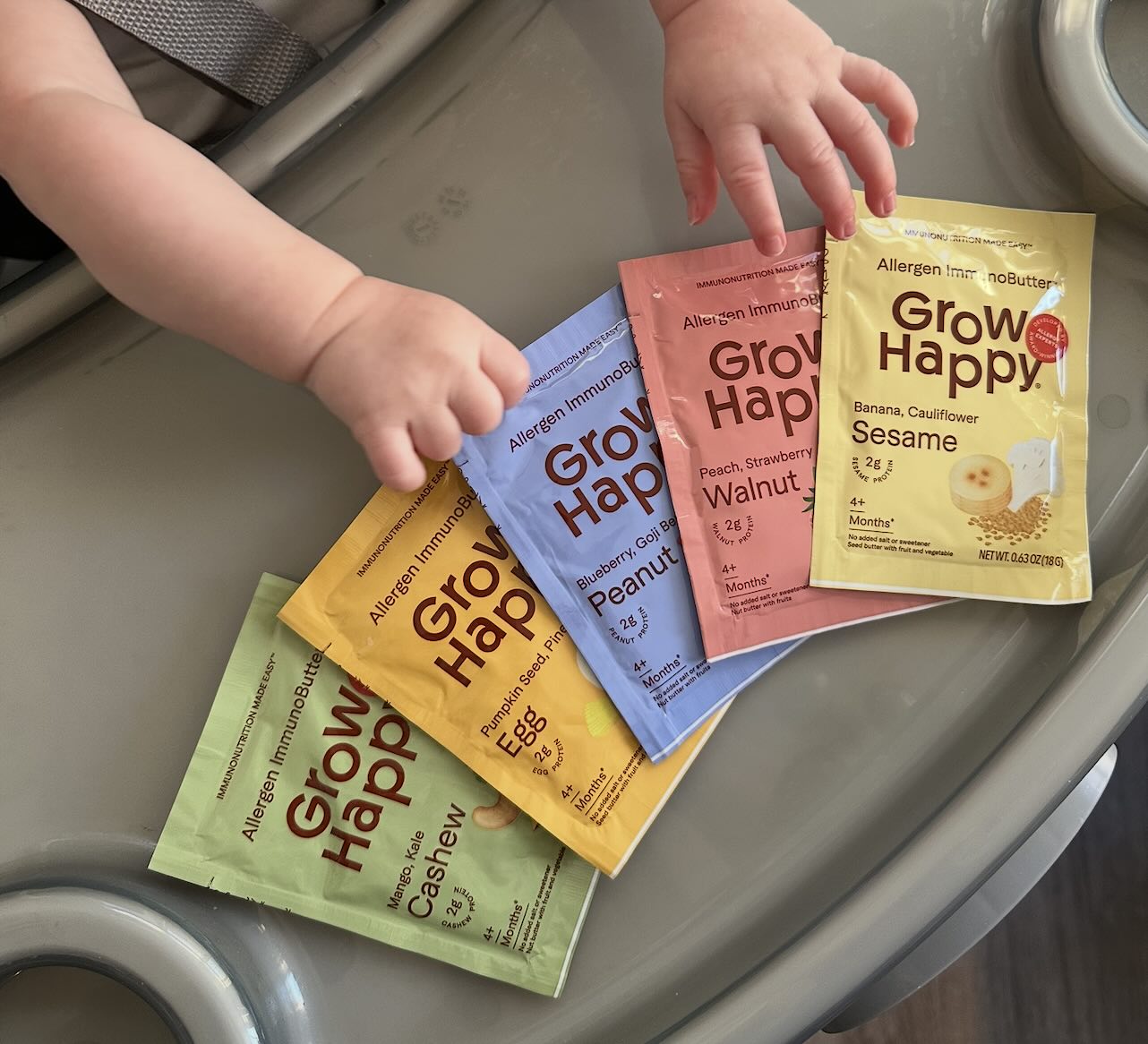
That’s where GrowHappy comes in. Their Allergen ImmunoButters provides evidence-based servings of nut and seed butter mixes, each featuring one of five top allergens that are especially important: peanut, egg, cashew, walnut, and sesame. It’s an easy way to keep these important allergens in your baby’s diet without having to plan it all yourself (mom hack: sign up for their 3-month training program to help set a strong foundation and build tolerance).
One way I’ve found to reduce the stress of introducing allergens: make it part of your everyday routine, like breakfast! Just mix a packet with a little water, breast milk, or formula or stir it into foods your baby already enjoys like yogurt, oatmeal, cottage cheese, smoothies, or purees. You can also spread a thin layer on toast or pancake strips for self-feeding.
Other reasons why I love GrowHappy:
- Co-founded by leading allergy experts
- Made with real, whole foods (not ultra-processed ingredients), including whole nuts and seeds, which is more effective for training the immune system compared to products that use defatted flours (products that have their natural fats removed during processing)
- Provides healthy protein and fat to support growth and keep little tummies satisfied
- Good mix of fibers to support digestion and gut health
- Includes a variety of nutrient-dense ingredients you don’t always find in baby foods, like kale, goji berries, and papaya
- Each packet contains one research-backed serving (2 grams) to support allergen feeding
How GrowHappy Supports Gut Health
Supporting your baby’s gut health goes hand in hand with building tolerance to allergens through repeated feeding. Feeding a variety of foods early on (including allergens!) helps build a stronger, more resilient gut microbiome, the community of trillions of microorganisms in the gut that support digestion and overall health. The healthy fats and fibers found in nuts, seeds, fruits, and vegetables help nourish this system and keep the gut healthy.