

.webp)


.jpg)
Our team is dedicated to finding and telling you more about the web’s best products. If you purchase through our links, we may receive a commission. Our editorial team is independent and only endorses products we believe in.
Welcome to The Quality Makers, an interview series highlighting pioneers in the direct-to-consumer space. Join us as we get an inside look at the world of digital shopping through the eyes of the individuals shaping it…
We like
We don't like

I learned about Jessie Inchauspé—also known as the Glucose Goddess—during the pandemic, when all any of us could do was obsess over health outcomes and biohacking our way through to a thriving future self.
Somehow, this young French scientist had managed to captivate millions of people with simple graphs, showing how eating a bagel before or after a plate of vegetables could significantly transform one’s blood sugar levels. I was hooked. Whether or not this information had existed all along, it finally made sense. I would never start my meal with a carbohydrate again.
Now, years later with several books (one just launched), one product (another on the way), and one child under her belt, Jessie continues to educate and inspire the masses to take control of their health without sacrifice. She cares about data, science, and a really good piece of chocolate cake (paired with healthy fats and fiber!).
I feel like I’m in the presence of Glucose Greatness. Can you share a little about your background and how—in Glucose Goddess’ name—you got deep into the world of blood sugar? (No more puns, I kind of promise.)
JI: I actually started in mathematics and then biochemistry. I was fascinated by data—how numbers can reveal patterns in the body that we can’t see with the naked eye. When I worked in a genetics company in Silicon Valley, I began wearing a continuous glucose monitor, thanks to an internal experiment we had running. And it changed everything for me.
Foods that we consider “healthy” (like fruit juice, granola, or smoothies) were sending my glucose on these dramatic rollercoasters. Up, crash, hungry again. And these glucose spikes were making my mental health issues worse: depersonalisation, dissociation, brain fog. So I dug into the scientific research, and I realized that these spikes are linked to so many things people struggle with on a daily basis: fatigue, cravings, inflammation, acne, even long-term risks like heart disease.
At the time, this science existed mostly in academic papers. So I started sharing the graphs and the research on Instagram in a very visual, accessible way. Suddenly millions of people were seeing, for the first time, what their breakfast might actually be doing inside their body. That’s how the whole Glucose Goddess adventure began.
The concept of blood sugar and insulin has historically been reserved for diabetics and those in the pre-diabetic range (which I acknowledge is very 90s). Why do you think blood glucose all of sudden became a mainstream health topic for the masses?
JI: For decades, we treated glucose as a disease marker rather than a daily biological signal. Doctors would only talk about glucose if you already had diabetes, or were going towards diabetes.
But the reality is that every single person has glucose fluctuations all day long. And research shows that those fluctuations, if they’re big and frequent, can affect how we feel today and how healthy we’ll be decades from now.
I think two things have changed:
- First, continuous glucose monitors made the invisible visible. Suddenly people could see, in real time, that their “healthy cereal” might be creating the same glucose spike as a dessert.
- Second, people are tired of feeling exhausted and hungry all the time. So when people started to learn about glucose, and to notice how stabilizing their glucose could help with energy, cravings, sleep, skin, and mood, they finally felt empowered.
Brass tax: What is the actual importance of blood glucose? How does it impact our long-term health outcomes?
JI: Glucose is the primary fuel for our cells. But our bodies were made for times where glucose was sparse. We would get it from root vegetables or seasonal fruit. Our bodies are not adapted for this crazy food environment filled with ultra-processed, addictive quick sugar fixes.
When we eat foods that digest very quickly (like refined carbs or sugar) glucose floods into the bloodstream and creates a big glucose spike. Our body responds by releasing insulin to bring it back down.
If this happens occasionally, it’s fine. But if we’re spiking many times per day for years, several things occur: constant hunger and uncontrollable cravings, chronic inflammation, increased fat storage, hormonal disruptions, and increased risk of insulin resistance, type 2 diabetes, heart disease, and even Alzheimer’s.
It’s like watering a plant. Give it just enough water and it’s happy and thriving, but give it too much and the roots will rot.

What are some signs that you're experiencing a blood sugar spike? What kinds of foods are creating these deviant spikes?
JI: People often assume they need a glucose monitor to notice spikes, but your body actually gives you many clues. I think the most common signs are feeling very sleepy after a meal, energy crashes in the afternoon, intense cravings for something sweet even though you ate less than 2 hours ago, brain fog or difficulty concentrating, getting “hangry” before your next meal.
Not everyone responds to foods in the same way. There are lots of factors at play like the gut microbiome, your metabolism, etc. But some foods that commonly create big spikes include things that are very quickly digested, like sugary drinks fruit juice or fruit smoothies, breakfast cereals or granola, white bread and pastries, sweet snacks on an empty stomach,
But context also matters. The same food can cause a very different response depending on what you eat before it.
Obviously you’re going to have people out there screaming, “I’ll never give up my sweet treats or carbs!” What are the key principles of The Glucose Goddess methodology to make things more balanced for people out there? How does it work?

JI: I’m one of those people! I love pasta, I love chocolate cake, and I don’t plan on giving them up anytime soon. And that’s the beauty of this method. You don’t have to eliminate carbs or sugar. The method is about how you eat.
For example, have a plate of veggies before your meal. Fiber forms a protective mesh in your intestines that slows the absorption of glucose into your bloodstream.
If you want something sweet, have it as dessert after a meal instead of an empty stomach, or pair it with protein, fat or fiber to slow down the absorption of glucose. For example, if I want to eat chocolate, I’ll try to eat a handful of almonds with it.
Move your body after eating. Like going for a walk, doing some calf raises under your desk, or tidying up your home. Because when your muscles contract, they use up glucose for energy, reducing the amount of glucose in your bloodstream.
And these are not restrictive rules, they’re small science-backed tweaks that can cut glucose spikes by 30–70%.
How has your perspective towards blood sugar shifted since being pregnant and having a baby (congratulations, by the way!)?
JI: Pregnancy was incredibly humbling.
I dug into all the research and found that pregnancy hormones dramatically change how the body processes glucose. Glucose spikes tend to be much higher during pregnancy, especially in the third trimester.
It also made the topic feel even more meaningful to me because science shows us that blood sugar regulation during pregnancy plays a role in both the mother’s health and the baby’s future metabolic health. And I also discovered a whole host of other key nutrients that no one tells pregnant moms about. I wrote them all down in my new book 9 Months That Count Forever.
Do the same principles apply to pregnant / new moms? Or are there nuances with blood sugar as it relates to motherhood?
JI: Yes, the principles still apply: we need to reduce our glucose spikes.
But I feel like it’s an even more important time to watch our sugar consumption. The WHO actually recommends 25g of sugar per day. Which is equivalent to one large orange juice.
Research shows that high sugar intake during pregnancy can change your baby’s metabolic programming. Meaning that it can predispose him or her to obesity and type 2 diabetes later in life. And it’s also been linked to increased risks of mental health issues like ADHD, autism, and even schizophrenia.
What does a savory breakfast look like for the Glucose Goddess? What are your favorite go-to meals that are as delicious as they are balanced?

JI: Honestly, savory breakfasts changed my life. I grew up eating Nutella crêpes for breakfast. And when I finally made the switch to a savory breakfast, my whole day felt different.
Some of my favorites are: a two-egg omelet with feta and cherry tomatoes; greek yogurt with almond butter and blueberries (and I also add unflavored whey isolate for extra protein); and leftovers from the night before, anything from chicken with veggies and rice, to fish with zucchini.
My tip is that breakfast should always be centered around protein (Greek yogurt, eggs, meat, fish, lentils, pulses, tofu, tempeh). And then you can add healthy fats (like nuts, seeds, avocado, butter) and fiber (tomatoes, mushrooms, spinach, or any veggies you like). Starch is optional and is there just for taste (like toast, oats, potatoes, rice, bagel). And the only thing sweet should be whole fruit. No fruit juice, no cereal, no pastries. And if you do want a pastry, you can have it as dessert after your savory breakfast!
If you’re traveling or not in a familiar food environment, how do you ensure that you sustain a balanced blood sugar on the go?

JI: Disrupting your routine with travel can make things a bit more tricky, but the hacks can definitely still apply. If I’m at a restaurant, I order a veggie starter or a vegetable side dish and eat it before my main meal. I carry nuts with me to avoid the temptation of naked carbs. I sometimes even take boiled eggs with me on the plane. I take a short walk after meals, or take the stairs up to my room rather than the elevator.
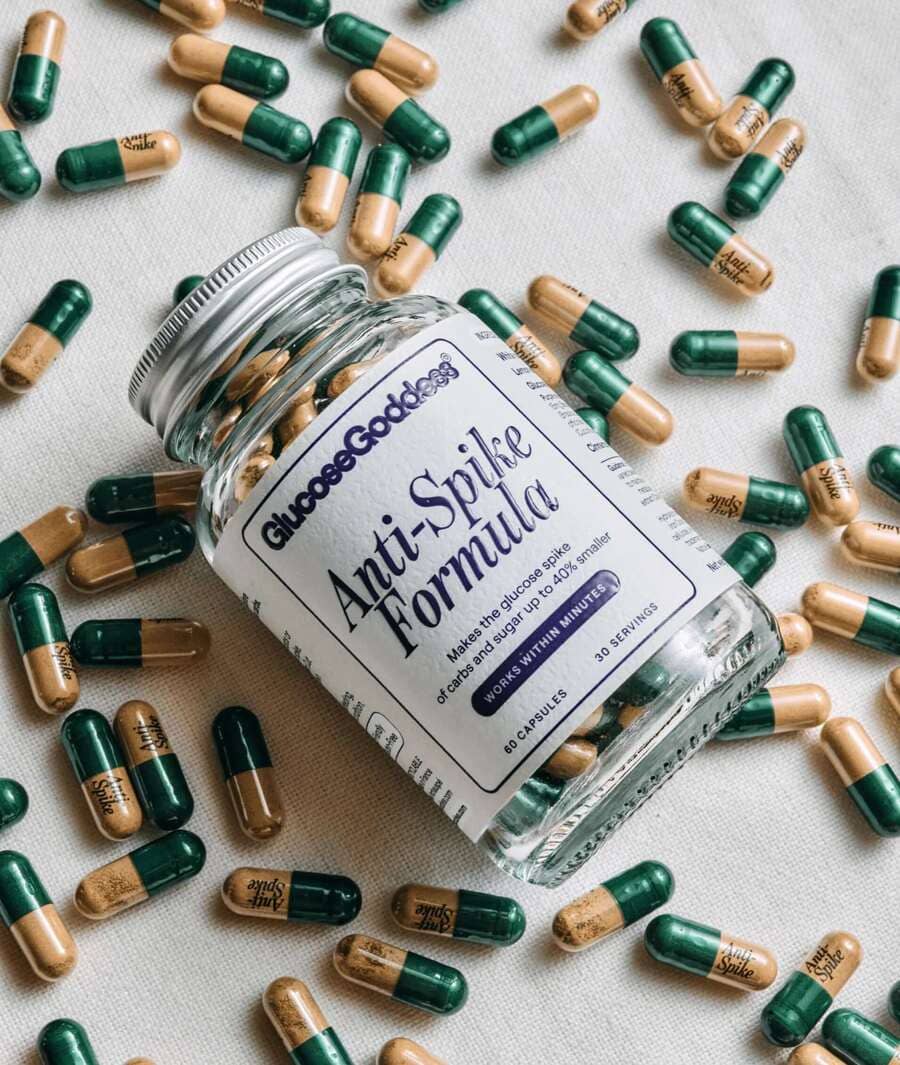
And I also take Anti-Spike Formula with me wherever I go. It’s a supplement with 100% natural active ingredients including mulberry leaf extract and citrus polyphenols that can reduce your glucose spikes by up to 40% when taken right before your carb-heavy meal.

We like
We don't like

What are your thoughts on the current GLP-1 revolution that’s happening alongside a ton of wellness brands coming out with more holistic GLP-1 boosters? Should everyone be wearing glucose trackers?
JI: GLP-1 medications are incredibly powerful tools for certain people, particularly those struggling with obesity or metabolic disease. They can be life-changing. But they come with a host of side effects, especially when the medication is actually stopped. Studies suggest that about 30% of weight loss from these drugs comes from muscle, which we don’t want! This can lead to long-term weakness, frailty, and slower metabolism. And most people regain two thirds of their lost weight within a year of stopping the medication.
That’s why a lot of people are looking at more natural and sustainable ways to get GLP-1 levels up. Some work, some don’t. And only research and time will tell us which trends to keep and which ones to forget.
As for glucose trackers, they can be fascinating learning tools. But they need to be used in a non-judging empowering way. They’re useful to track patterns, figure out which foods lead to the biggest spikes for you personally, and which hacks work the best. But they shouldn’t be used to obsess over numbers or a flat curve. Either way, you can apply the glucose hacks and feel the difference without ever wearing a monitor.
How does exercise factor into this whole “journey?”
JI: Firstly, research shows that building muscle is actually one of the key factors in longevity, cancer-reduction, and better metabolic health.
Secondly, most of us are not eating enough protein. Protein is made of amino acids, which are essentially the building blocks for every single one of our cells, including our skin cells, our heart cells, our lungs cells, our brain cells. So we need protein to maintain the cells we already have, and to be able to build new ones.
The US just increased their recommended intake of protein from 0.8g/kg/day to 1.4-1.6g/kg/day. They basically doubled it! That’s because new research shows that until now we massively underestimated how much our bodies needed.
And this is even more so during pregnancy, since we’re also building our baby’s body with the protein that we eat.
.jpeg)
.jpeg)
.jpg)


