We like
We don't like

In partnership with Good Bacteria. Editor’s Note: We only select and work with partners that meet our quality standards, so you can rest assured we only endorse products we believe in.
Choosing a probiotic is hard work. I mean that earnestly. There are plenty of good reasons to do that hard work – your gut health, which probiotics support, is linked to everything from digestion to immunity, nutrient absorption, skin clarity, and even mental health – but it’s admittedly a headachey, time-consuming, and costly endeavor.
That, my friends, is where I come in. Ahead of the new year, I sat down to dig through the data and try a few of the buzziest probiotic brands in order to write this throwdown. Spoiler alert: probiotics can work wonders – especially when they’re formulated with the right stuff in the correct way.
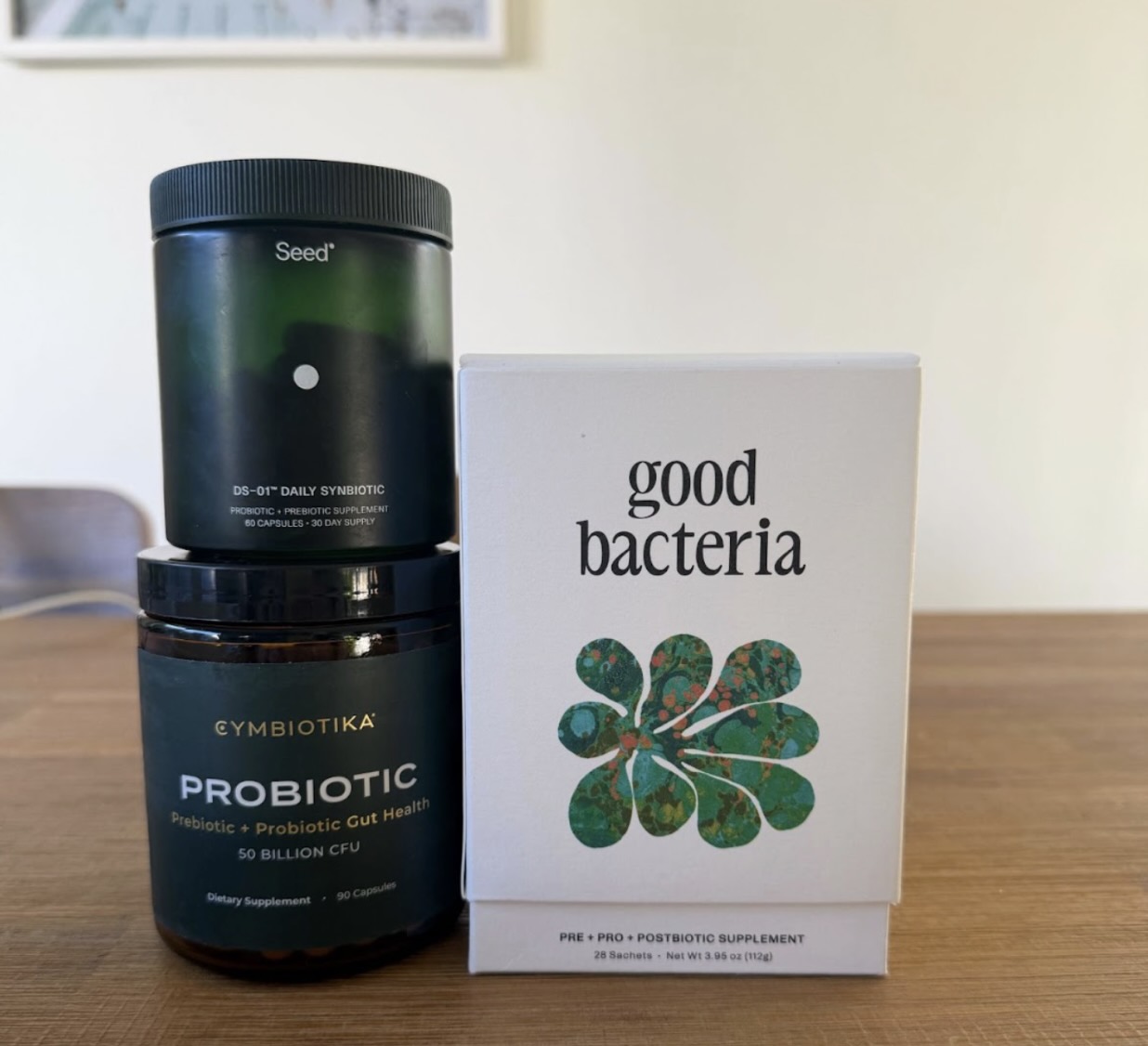
I tried Seed and Cymbiotika, in addition to new entrant Good Bacteria. For the record, all three are popular for a reason – and lean on science that blows many competitors out of the water. And still, the results surprised me. Without further ado…
Let’s Meet the Players
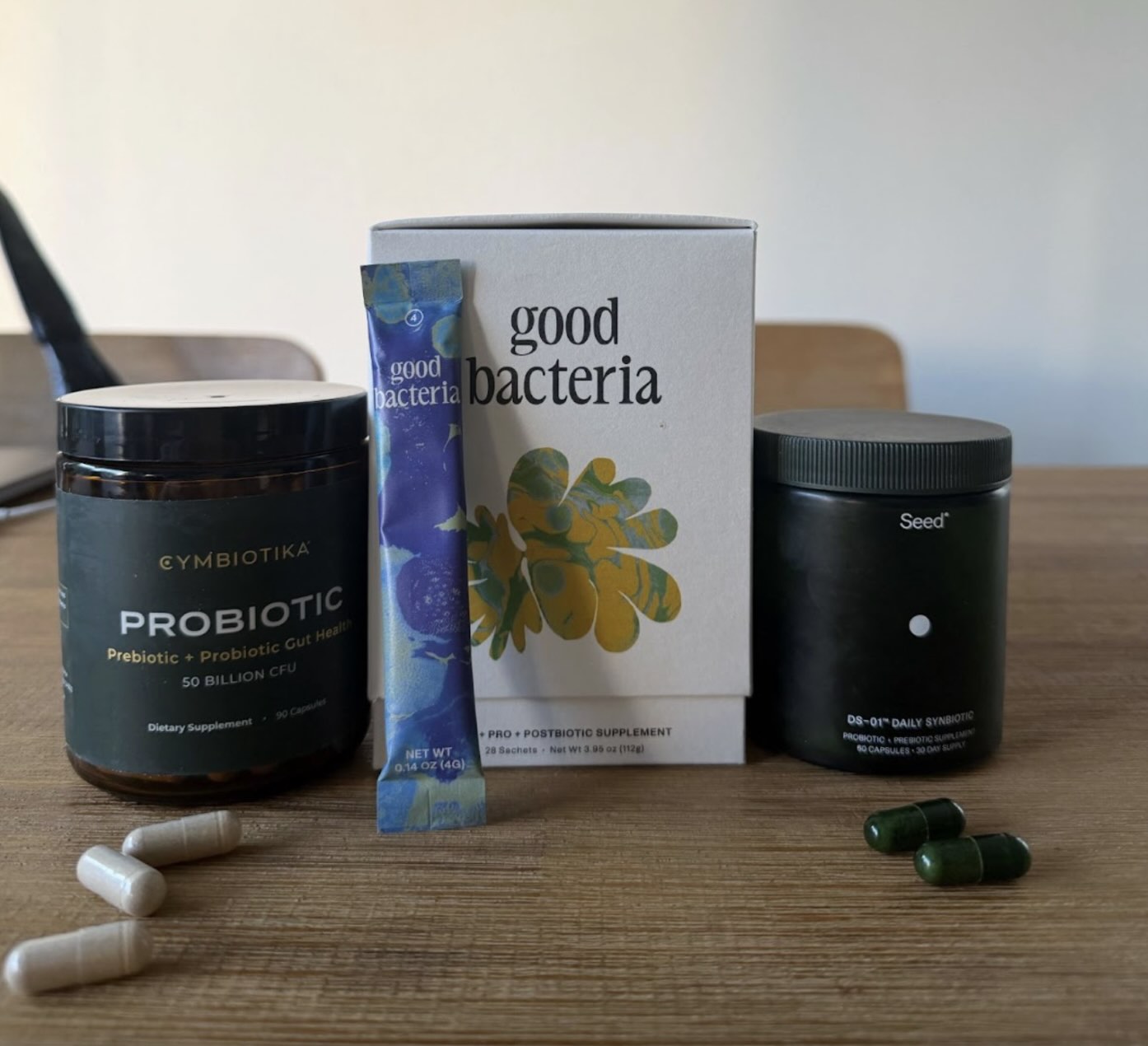
Good Bacteria: A doctor-formulated, rotating probiotic system designed to increase the diversity in your gut with sachets that change weekly (instead of the same capsule every day). It has a combination of pre + pro + postbiotics and, notably, 3g of fiber inside.
Seed (DS-01® Daily Synbiotic): One of the internet’s most seen brands, Seed is serious about its science: 24 fully identified strains, measured in AFU (not CFU), paired with a pomegranate-derived prebiotic, delivered via a capsule-in-capsule system.
Cymbiotika (Probiotic): From a buzzy brand with a lot of popular products, this probiotic offers a comprehensive blend with 19 probiotic strains plus prebiotics and extras like herbs and amino acids, in delayed-release capsules.
The Formula Philosophy
Good Bacteria: The premise is a rotating synbiotic model: instead of a single static formulation (which can lead to probiotics losing effectiveness and causing imbalance), you receive four distinct weekly formulations over a 28-day cycle. Each week pairs clinically studied probiotic strains with diverse prebiotic fibers and a postbiotic. This approach reflects the variety of microbial inputs found in nature and a nutrient-rich diet, supporting microbial diversity rather than repeating the same combination day after day.
Seed: The DS-01 Daily Synbiotic is explicit about strain disclosure and composition: it lists 24 fully identified probiotic strains with documented strain IDs and communicates a total of 53.6 billion AFU per serving. Very scientific, and also transparent.
Cymbiotika: This formula lists 19 probiotic strains and provides a full ingredient panel, which gives clarity on the species included. With that said, it’s not positioned around strain-level ID emphasis in the same way Seed is.
The Form Factor
Good Bacteria: Good Bacteria comes as a daily powder sachet, which is actually a huge differentiator. While capsules can include small amounts of prebiotic ingredients (like trace plant extracts), they don’t have enough physical space for real, functional fiber. On the other hand, 99% of Good Bacteria’s powder sachet is its fiber blend (a full 3g serving) which helps support the gut environment the probiotics are entering. As it turns out, that makes all the difference in digestion.
Seed: Seed comes in a capsule-in-capsule format designed to protect the strains through digestion. It’s shelf-stable (no refrigeration necessary) and travel-friendly (comes with a travel case).
Cymbiotika: Cymbiotika’s probiotic is delivered via delayed-release capsules and includes a blend of strains plus prebiotics and additional botanicals.
Efficacy
*Here’s where things get personal. This was purely my experience with each.
Good Bacteria: Of the three, Good Bacteria was the one I felt the most, both in the beginning and once my body adjusted. It had the clearest “on-ramp” period for me: during the first couple of weeks, I definitely experienced bloating and gassiness. In a strange way, I came to appreciate this, as I took it as evidence that it was working. Once I acclimated, I genuinely experienced less bloating, more regularity, and an overall feeling of being lighter in my body.
Seed: I tried Seed for a few months, and felt neutral to positive about the experience. I was nervous about an adjustment period but didn’t notice anything drastically different. For that reason, once my travel schedule picked up around the holidays, it naturally fell out of my daily routine with no issue. With that said, Seed has an incredibly loyal following and a strong scientific reputation, so I wouldn’t take my personal experience as a reflection of its effectiveness for all bodies.
Cymbiotika: Cymbiotika landed in a neutral category for me: easy to take, no real ramp-up period, and no dramatic shifts that I could point to and say this is the probiotic at work. It’s a comprehensive formula, and the brand has plenty of devoted fans, but for my body, it didn’t feel as tangible or distinct in the way Good Bacteria did.

Cost & Commitment
Good Bacteria: A system rather than a casual add-on, Good Bacteria is structured as a four-week rotation, which naturally encourages you to commit to a full cycle. Pricing-wise, it costs $58/month when you subscribe. It’s not cheap, but that’s kind of the point – you’re paying for something that’s quality-made and actually works.
Seed: DS-01 is priced at $49.99 per month on subscription for a 30-day supply, which is relatively accessible within the premium probiotic category. There’s no one time purchase option, so you have to subscribe, but you can pause or cancel anytime.
Cymbiotika: The biggest investment of the three, Cymbiotika’s probiotic is priced between $80-89/month depending on whether or not you subscribe.
In Conclusion, I Subscribed to…Good Bacteria
It’s the option that feels most worth the money and daily commitment. The rotating system is genuinely different in a category where most formulas look the same, and the fiber piece, I’ve learned, is so crucial.
While the adjustment period was real, it also made the results feel more tangible on the other side. Once I acclimated, I felt lighter, more regular, and noticeably less bloated – one of those I didn’t know how much better I could feel products…until I did.