


We like
We don't like

In partnership with Grüns. Our team is dedicated to finding and telling you more about the web’s best products. If you purchase through our links, we may receive a commission. Our editorial team is independent and only endorses products we believe in.
As a registered dietitian, I get asked about greens powders all the time. To be totally honest, they’re one of the categories I trust the least at face value. Everyone wants a shortcut to "eating better," and the market is flooded with options that promise that. Something most people don't realize, though, is that healthy ingredients look impressive on paper, but it's the dose that actually does something in your body. I've tried more greens powders than I can count at this point, and when you take a closer look, a lot of them fall apart quickly.
Before I recommend any supplement to my patients or my community, I run it through the same four criteria I'd use to evaluate any product in this category: efficacy, quality & transparency, price, and adherence. I put three of the most talked about greens products on the market right now — Bloom, Huel, and Grüns — through that exact test to see which one actually holds up.
My Evaluation Criteria
- Efficacy: Does it actually fill a real nutrient gap? Is it clinically dosed, or just pixie dusted?
- Quality & transparency: Taking a closer look at third-party testing, ingredient disclosure, and what's actually on the label.
- Price: What is the price per serving?
- Adherence: Will you actually take it every day? This includes things like format, taste, and real-life usability.
Meet the Contenders:
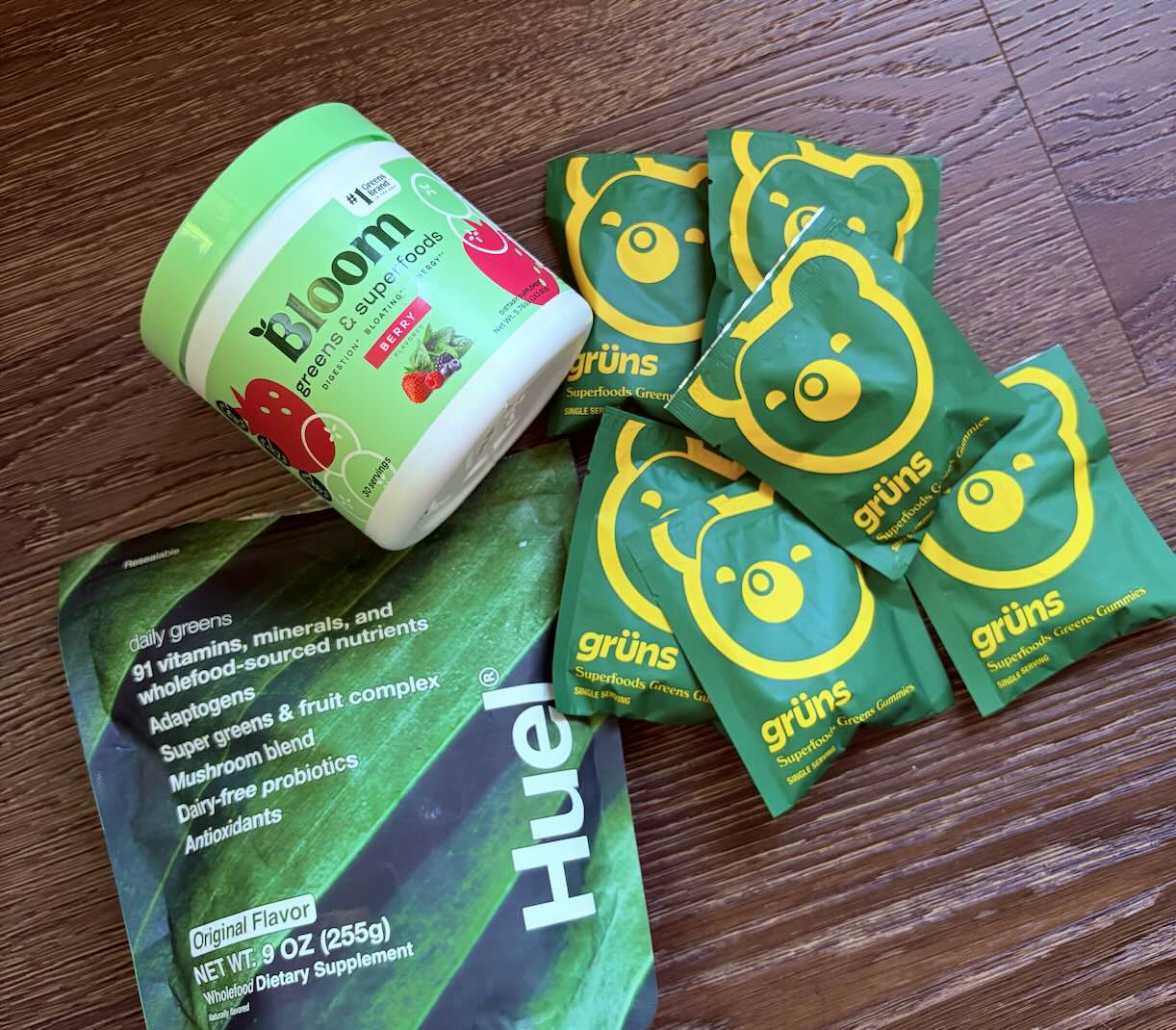
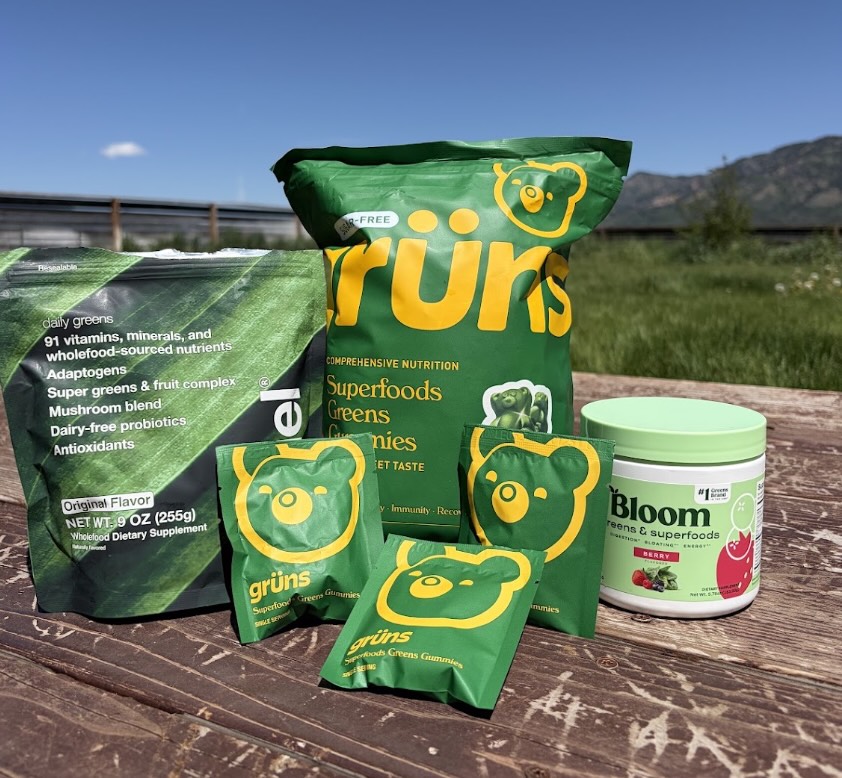
Bloom: A greens powder marketed heavily toward women, known for its large social media following and wide range of flavors. It blends 30+ ingredients across multiple blends in a single scoop.
Huel: A nutrition-focused greens powder with one of the longest ingredient lists on the market at 91 ingredients. It's positioned as a comprehensive daily nutrition solution, popular with the health optimization crowd.
Grüns: A greens supplement in gummy form, designed to make daily micronutrient support easier to stick with. With 60 named ingredients and a clinical study backing absorption, it's built for people who want the benefits of a greens supplement without the powder and shaker bottle.
Efficacy
This is the question I care about most, and the one most greens powders can't actually answer: does taking this every day change anything measurable in your body?
- Bloom: 30+ ingredients across blends like Green Superfood (organic barley grass powder, organic spirulina powder, organic wheatgrass powder, organic alfalfa leaf powder, organic chlorella powder) and Antioxidant Beauty (acai fruit extract, goji berry, matcha green tea leaf), but no vitamins or minerals listed on the supplement facts panel, which means there’s no way to know if you’re getting meaningful amounts of nutrients like vitamin C, vitamin A, or iron – the things a greens powder is supposed to provide in the first place. And no public certificate of analysis (COA) to verify doses. A long ingredient list means very little if you can’t confirm what’s actually in each scoop.
- Huel: 91 ingredients, but most are grouped into proprietary sub-blends, meaning the label shows the blend total but not how much of each individual ingredient is inside it. That makes it hard to verify if you're getting a meaningful dose of any one thing, even with the third-party testing in place.
- Grüns: 60 ingredients, all named – including 21 vitamins and minerals, plus their doses. Backed by a 2025 randomized, double-blind, placebo-controlled clinical study showing participants had meaningful increases in key nutrients measured in the blood — not just self-reported energy or digestion, but actual bloodwork. That's rare for a supplement at this price point.
Winner: Grüns
Quality & Transparency
Efficacy tells you whether a formula can work – transparency tells you whether you can actually trust what's on the label. So how do you know if you can trust it? Start with third-party testing: who's checking the work, which lab is doing it, and whether those results are publicly available. This is where a lot of brands that look great on paper start to fall apart.
- Bloom: Claims third-party testing but doesn't disclose which lab conducts it and provides no public COA. You're being asked to trust the label with no independent way to verify it.
- Huel: Tested by independent ISO 17025-accredited labs for heavy metals, pesticides, and allergens — one of the stronger transparency points across all three brands, even if doses are still buried in proprietary sub-blends.
- Grüns: Grüns is 3rd party-tested for potency, purity, & safety. They regularly test for all 20+ vitamins & minerals to ensure claims are accurate & clear of contaminants including: 70 different pesticides, 4 types of heavy metals, 16 different contaminants, and 9 microbial contaminants.
Winner: Tie between Huel and Grüns
Price
Price per serving varies significantly across these three products, and it's worth factoring in when you're committing to a daily supplement.
- Bloom: $34.99 for a 30-serving supply ($1.17/serving), or $31.49/month with a subscription — the most affordable option of the three.
- Huel: $56.50 for a 30-serving pouch ($1.88/serving), or $45/month with a subscription. Their travel packs include 13 servings in individual packs for $43, or $3.58/serving.
- Grüns: $66.65 for a 28-serving pouch ($2.38/serving), with first time subscription order pricing bringing it down to $29.99 for 28-serving supply ($1.07/serving). You can save 61% on your first order and get free gifts here. †Offer valid for new subscribers only. Subscription renews at $49.99 every 4 weeks. Cancel anytime.
Winner: Bloom — though Grüns offers the most value when you factor in what it replaces (multivitamin, prebiotic, greens supplement combined).
Adherence
This is the criterion people underrate the most. Even the best formula on paper does nothing for you if it's sitting untouched in your pantry by week three, and building a new healthy habit is hard enough without adding a product you don't actually enjoy. That's why I always tell my patients: choose a product you enjoy and can actually be consistent with.
- Bloom: Powder that requires mixing, a clumpy texture reported by multiple reviewers, and a taste that divides people.
- Huel: Powder format that requires mixing with liquid, mild flavor. It’s functional, but the extra prep step and lower excitement factor can be a barrier to daily consistency for some people.
- Grüns: Gummy format, no mixing or shaker bottle required, easy to bring along in a bag, at a desk, in the car, on a plane. Reviewers generally rate the taste well, which is relevant since a supplement only works if it's actually taken consistently.
Winner: Grüns
Why Grüns Wins
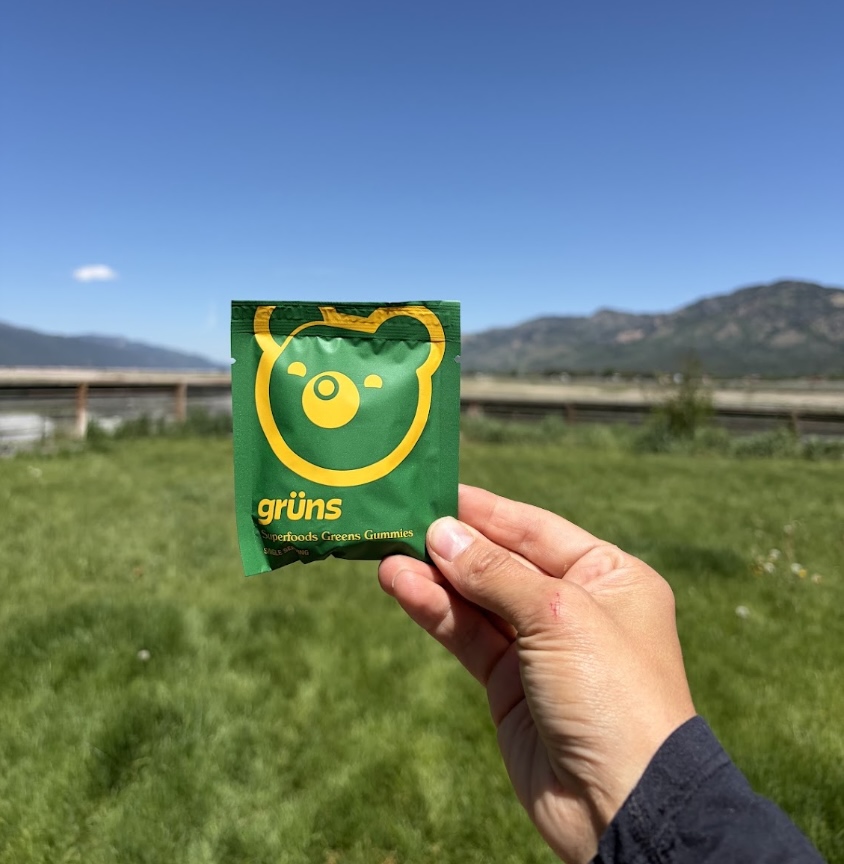
Every brand here does some things well. Huel has a transparent, ISO-accredited third-party testing process in place. Bloom has built a large following through marketing and brand presence. But when I run all three through the same four criteria, Grüns is the one that comes out on top: clinically studied absorption backed by bloodwork data, rigorous third-party testing with a named lab, and a format that's easy to stick with day to day.
I tell all of my patients the same thing: I'm not looking for the trendiest or flashiest ingredient list. I'm looking for the one that holds up when you actually check its work, and the one you'll actually keep taking. Grüns isn't the cheapest option on this list, but when you factor in what it replaces (your multivitamin, prebiotic, and greens supplement in one), the math often evens out. Based on efficacy, transparency, price value, and real-life usability, it's the one that clears every bar, which is why it's the one I'd recommend.

.jpeg)
.jpg)


