We like
We don't like
Our team is dedicated to finding and telling you more about the web’s best products. If you purchase through our links, we may receive a commission. Our editorial team is independent and only endorses products we believe in.
I’m that girl. The one who loves a five-step nighttime routine, a skin care project, a year-long goal. Which, naturally, includes techy at-home solutions and rituals: LED red light therapy, lymphatic drainage, microcurrent, and more. But, I respect that not everyone wants to spend their precious minutes dabbing, zapping, and slathering when they could be watching TV on the couch.
To help you make the most of your everyday routine, I turned to the experts: Which devices are worth the time, money, and long-term commitment? What’s best for hyperpigmentation or acne? Sculpting or depuffing? The skin czars have spoken. Whether you’re into low-maintenance skin care or an exhaustive daily routine, these are the devices worth your attention right now.
IN-OFFICE VS. AT-HOME TREATMENTS
First off, I’ll let you in on the one tip every expert confirmed: At-home devices are complements, not supplements, to in-office treatments.
“Think of [these tools] as support, not substitution,” says Marya Khalil-Otto, Licensed Esthetician and CEO of Vitality Institute. “At-home tech shines with daily or weekly consistency, like daily sunscreen, whereas in-office treatments offer targeted intensity that can’t be matched at home.”
“In-office devices are medical-grade, meaning they deliver higher energy levels, deeper penetration, and more targeted results,” says Board Certified dermatologist, Dr. Dendy Engelman. “They’re performed under professional supervision and often combined with procedures like microneedling, peels, lasers, or injectables. That’s what allows us to achieve faster, more dramatic, and longer-lasting outcomes.” Think: Morpheus8, CoolPeel, Moxie, BBL, Halo, and other high-intensity treatments. “That said, at-home devices can be excellent for maintenance, prevention, and gradual improvement, especially between office visits.”
Dr. Khalil-Otto advises a few best practices when mixing in-office with at-home treatments:
- Follow timing, not impulse: Give skin time to recover after in-office treatments. More stimulation doesn’t mean better results. Respect the healing window your provider recommends.
- Prioritize consistency over intensity: Lower-intensity devices used regularly deliver better long-term outcomes than sporadic, aggressive use. Think routine, not reaction.
- Match the device to the treatment: After procedures, focus on calming and reparative tools like LED. Save stimulating devices like microcurrent for when the skin has fully recovered.
- Keep skincare barrier-first: Use gentle, supportive skincare alongside devices. Avoid layering strong actives on days you’re stimulating the skin unless advised by a professional.
- Listen to your skin — always: Redness, sensitivity, or inflammation are signals to pause. Healthy skin responds — it doesn’t struggle.
So which devices are the ones worth trying? I’ve broken them out into three popular categories: LED red light masks, microcurrent, and energy boosting.
THE DEVICES


We like
We don't like

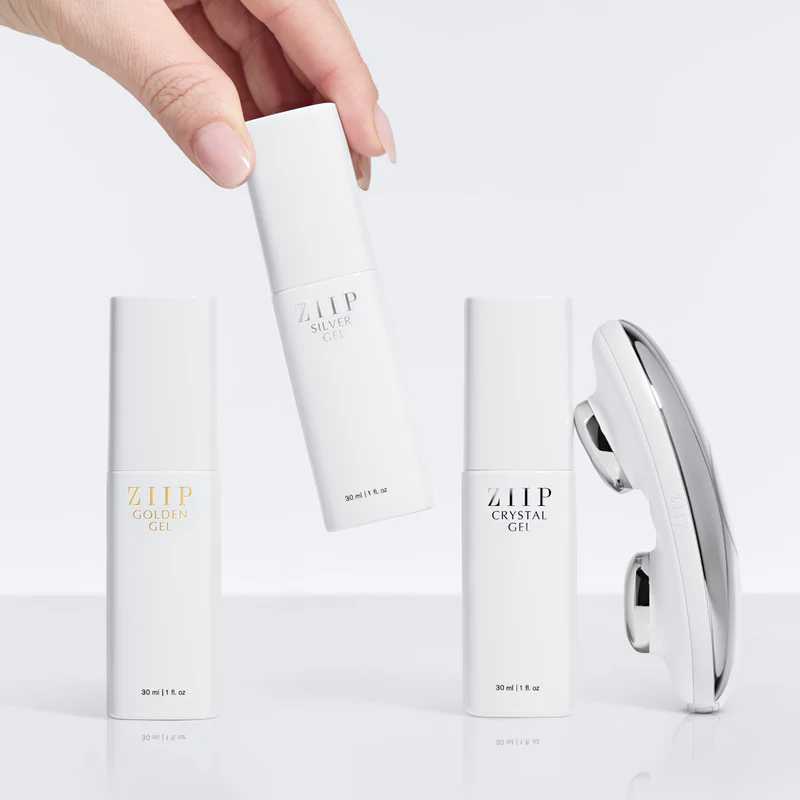
The Ziip Halo is my identity now. I use it diligently with the Ziip app, where I can choose from 17 treatments (from 1 minute to 12 minutes long). The Halo uses both microcurrent and nanocurrent, which allows wavelengths to reach various depths in the skin: While microcurrent is best for toning skin, nanocurrent supports the skin’s natural collagen production and cell regeneration. Whether you’re looking for instant or long-term results, Ziip Halo is excellent for supporting healthy, firm skin.
We like
We don't like

If you’ve ever considered trying a microcurrent device for yourself but have been deterred by its high price point, now’s the time to take the plunge. The Mini+ Starter Kit by NuFACE is tiny, but its mighty microcurrent helps to sculpt facial muscles over time resulting in a facelift-like effect without the facelift (!). Although pricey, the kit comes with everything you need to get started including the activator gel and applicator brush. The device itself is FDA-approved, travel-friendly, and holds a long-lasting charge. During the sale, it’ll be $50 off its original price – down from $250 to $200.
We like
We don't like


.jpg)
LED Red Light Masks
Best for: Mature skin or as a preventative measure on younger skin; light as well as dark skin tones; blue light is good for hyperpigmentation and acne
“[LED red light masks] deliver consistent wavelengths that support collagen production, inflammation reduction, and overall tone — technology that’s rooted in clinical LED therapy used by dermatologists,” says Dr. Khalil-Otto. But not all LED is created equal.

She explains: “Omnilux delivers a more clinical, treatment-focused experience. TheraFace Mask Glo offers a comprehensive, user-friendly approach with multiple light options. The Solawave 4-in-1 Red Light Therapy Wand is great for daily glow maintenance, but it’s not designed to replace full-face LED therapy. If you’re serious about results, masks outperform wands.”
I’ve personally had positive experiences with each of these masks (as well as the Solawave Wrinkle Retreat PRO, which is only a 3-minute commitment), but lately I’ve enjoyed how the TheraFace Mask Glo offers a 12-minute treatment of 504 red, infrared, and blue light, all while providing a gentle scalp massage through subtle vibration in the mask straps. Dr. Khalil-Otto also notes that TheraFace Mask Glo is especially good for those with acne-prone skin, hyperpigmentation, and those higher on the Fitzpatrick scale, which spans a variety of skin tones.
Advanced Microcurrent
Best for: Depuffing, a snatched jawline, tightening and firming, as well as treating the neck and a variety of skin tones
.png)
Think: ZIIP Halo & NuFace. “When used consistently and correctly, microcurrent can meaningfully improve contour, tone, and muscle engagement — results that come close to lower-intensity office facials,” says Dr. Khalil-Otto. “NuFace is a classic for a reason — simple, effective, and dependable when used consistently. ZIIP Halo brings a more advanced, customizable approach that appeals to users who enjoy tech-driven routines. Both work.”
When it comes to helping her patients choose, Dr. Engelman says, “ZIIP is my go-to for patients who want more than just lifting. It combines microcurrent + nanocurrent, which allows for deeper cellular stimulation and more targeted treatment protocols. NuFace uses microcurrent only, which works beautifully for muscle stimulation and contouring. It’s intuitive, quick to use, and great for daily routines.”
Energy-Boosting Tools (Including the $6K LYMA Pro)
Best for: Mature skin, tightening, firming, and treating the neck
High-end devices like the LYMA Pro laser or Medicube Booster Pro combine multiple energy modalities (LED + RF + microcurrent) and, according to Dr. Khalil-Otto, sit closest to professional equipment in terms of depth and bio-stimulation—when used consistently over time.

“The Medicube Booster Pro is a modern, multi-tech device that can genuinely enhance glow and product absorption when used correctly. It’s impressive, but it’s not a shortcut,” says Dr. Khalil-Otto. “This is a tool for someone who understands their skin and respects technology — not something to overuse or rely on as a replacement for professional care.”
As for the LYMA Pro, I needed to know more. What could possibly justify this price tag? Dr. Graeme Glass, Plastic and Craniofacial Surgeon, as well as LYMA Aesthetic Director, explains:
“Most clinical treatments—whether lasers like fractional or CO2, or other technologies like radiofrequency and IPL—work by creating controlled thermal damage to trigger your body's healing response. That's why they come with discomfort and recovery time. LYMA uses photobiomodulation, which is fundamentally different.
By stimulating cellular mitochondria, the LYMA laser ‘supercharges’ the cell and this actually leads to a manipulation of gene expression, whereby skin cells switch on genes associated with youthfulness and switch off genes associated with aging. This happens without tissue damage. No pain, no downtime, no scarring risk. This technology has been used in medical settings for wound healing and we've tested it in published clinical trials. What's interesting is that the device professionals use is the same technology you can use at home—there's no ‘professional grade’ versus ‘consumer version.’ It's the same innovation.”
He says LYMA also plays well with in-office treatments. “It can help support recovery after in-office treatments by calming inflammation and supporting tissue repair. It works beautifully alongside treatments like Hydrafacials, gentle peels, bio-remodelling injectables, and strategic Botox.” He just recommends waiting until the initial healing phase is complete before using it.
It seems obvious, given Dr. Glass’s affiliation to LYMA, that he’d have accolades for the laser, but others agree: LYMA may be pricey, but it’s powerful.
“This deeper penetration is what makes it so uniquely effective compared to traditional at-home light devices,” says Dr. Engelman. “One of the things I love most is that it’s completely safe for all skin tones, can be used around the delicate eye area, and causes no pain, heat, or downtime — making it very easy to integrate into a long-term skincare routine. This is one of my favorite devices on the market.”
Dr. Khalil-Otto echoes the sentiment. “It’s closest to professional energy-based technology and best suited for someone who’s deeply committed to consistent use. It’s not trend-driven — it’s intention-driven.”
LOVE AT-HOME SOLUTIONS BUT WANT SOMETHING LESS TECH-Y?
If you’ve read this far, then you’re likely committed to the device life. But maybe you want an option that’s more…analog? Cecily Braden, esthetician, spa educator, and founder of The Lymphatic Brush, argues that all your skin issues could be solved with the The Lymphatic Brush.
“A separate device for each is not necessary,” she says. “It’s about finding a tool that helps optimize the natural function and metabolic processes of the skin and allows the skin to do what it’s intended to do: heal, hydrate, balance fluid levels, remove excess waste, protect and nourish.”
She says The Lymphatic Brush is the best solution because it focuses on reducing inflammation and filtering excess fluid and waste from the tissue. “It creates space for the metabolic processes of the skin to occur, resulting in bright, clear, more youthful skin that radiates from within. It cleanses and provides a clean and pristine environment for our skin cells to thrive, thus supporting the production of collagen and resiliency to tone, tighten, and naturally firm.”
For example, she explains that hyperpigmentation and puffiness dissipate when the skin is performing at optimal levels. “This is all a direct result and chain reaction that occurs when you support the lymphatic system. It’s not just about ‘depuffing,’ but supporting the surrounding systems and function of the skin on a large full-body and well-being scale.”
ON CONSISTENCY & THE PROPER ORDER
Ultimately, your device of choice will come down to your preferences and lifestyle. Prefer to use your hands with a lymphatic brush? Or pop on the cord-free TheraMask and multitask? Apparently, the device itself is not central to the story. “The real differentiator isn’t the device,” Dr. Khalil-Otto says. “It’s commitment.”
“When using multiple at-home devices, order matters to maximize results, safety, and product absorption,” says Dr. Engelman. “I recommend thinking in terms of: cleanse, treat, repair, protect. Don’t stack too many devices in one session.” She recommends 1–2 devices per routine to avoid overstimulation.
I personally like to stack my ZIIP Halo with my LED red light masks and save the Medicube––a more time intensive treatment––for its own night. (I.e. I do it while watching TV on the couch at night). For the all-in beauty fanatics, Dr. Khalil-Otto maps out how to use to multiple devices at once:
- Start with clean skin: Always begin on freshly cleansed, dry skin. No makeup, no residue, no shortcuts.
- Microcurrent first (NuFace or ZIIP): Microcurrent works best on bare skin with a conductive gel. This is your muscle work — lifting, contouring, and toning should always come before any active penetration or LED.
- Energy or penetration devices next (Medicube Booster Pro, LYMA Pro): Once muscle stimulation is complete, devices designed to enhance absorption or deliver energy-based benefits come next. This is when skin is most receptive and responsive.
- LED last: LED should always be the final device step. It calms, supports collagen production, and helps reduce inflammation after stimulation.
BUT IF THE EXPERTS HAD TO PICK…
As I like to remind my five year old, we’re not made of money. If you have to choose (and most of us will!), experts almost unanimously stand behind properly researched LED red light therapy, like Omnilux.
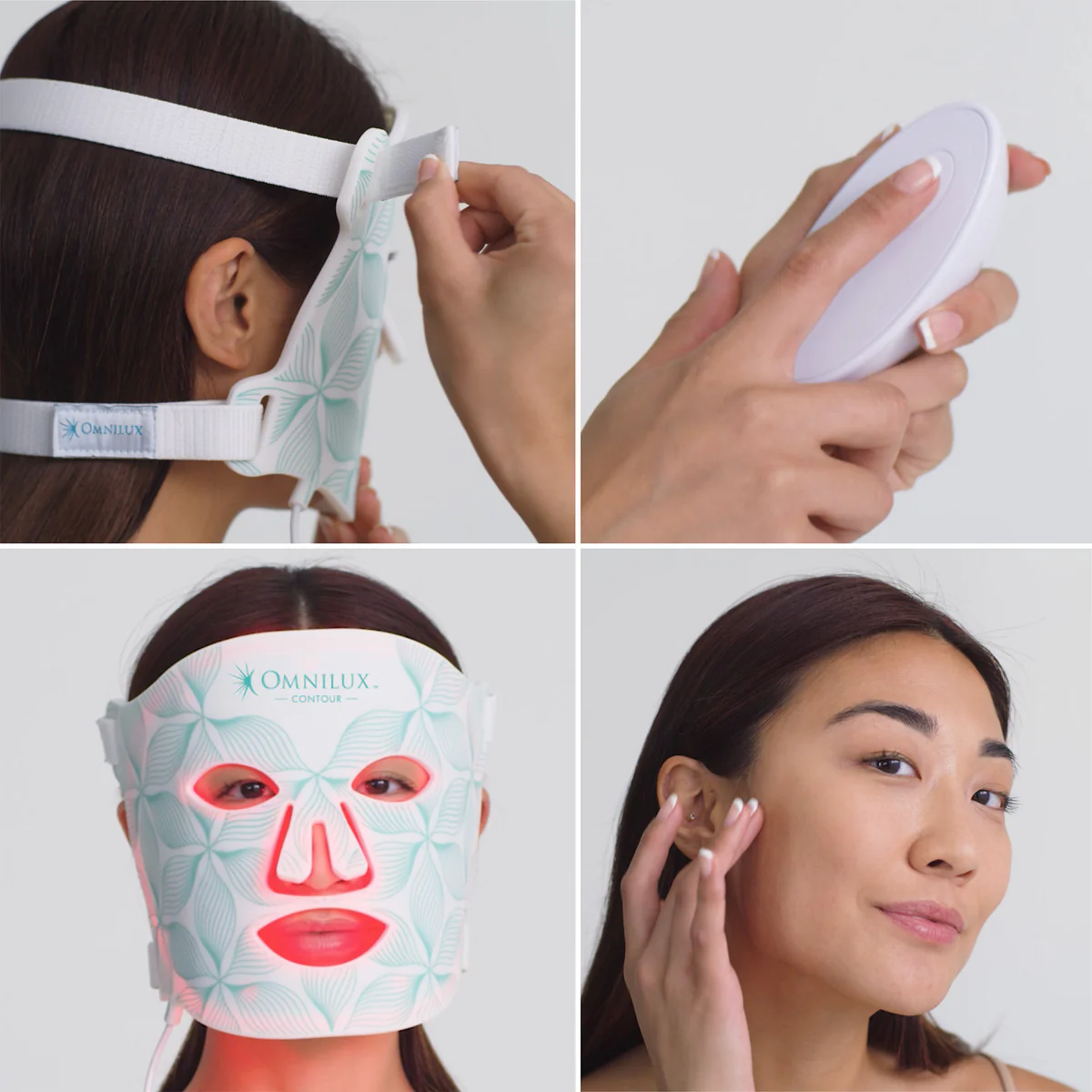
“If you commit to one device for truly healthy, resilient skin, the LED mask is the one that delivers the most consistent, skin-positive results over time,” says Dr. Khalil-Otto. “It’s less about instant transformation and more about long-term skin health — and that’s where real confidence is built.”
However, Dr. Glass stresses that the best device is the one you'll actually use. “LED provides surface-level stimulation, microcurrent provides temporary muscle toning, and cold therapy reduces inflammation. Each has its place and addresses different concerns through different mechanisms. [But] skin regeneration is cumulative––sporadic use won't deliver structural changes.”
Dr. Glass suggests that when you're evaluating devices, look for clinical evidence and technologies that work with your biology, not against it.
“Be honest with yourself about what fits your lifestyle,” he says. Ultimately, consistency is key. “A three-minute daily treatment you'll maintain beats an elaborate protocol you'll abandon within a week. A less advanced device used consistently will outperform a superior one sitting in a drawer.”
Have another favorite device? Follow me on Instagram at @deeniewrites and drop me a line.